
 |
 |
 |
 |
 |
 |
 |
 |
 |

 |
Growth hormone in dairy cows a greenhouse-gas plus: study
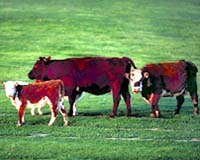
Washington (AFP) July 1, 2008 Giving one million dairy cows a growth hormone makes them produce more milk would cut greenhouse gas emissions equal to taking 400,000 cars off the road, a US study found. Large scale cow milk production requires the use of huge amounts of land, water and feed resources, noted Judith Capper, a researcher at Cornell University in New York. But using rbST -- the first biotech product used on US farms which has been in farm use for about 15 years -- can help reduce the "carbon hoofprint" while still meeting dairy demand, she explained. Known as either recombinant bovine somatotropin (rBST), recombinant bovine growth hormone (rBGH), or artificial growth hormone, the hormone has been used in the United States for over a decade to boost milk production. Monsanto markets rBST under the brand name Posilac. But use of the hormone is highly controversial. It has been banned by the European Union which cited animal health concerns. The product also has emerged in some places as a symbol of big corporate interests undercutting a traditional small farmer's product. "Giving rbST to one million cows would enable the same amount of milk to be produced using 157,000 fewer cows. The nutrient savings would be 491,000 metric tons of corn, 158,000 metric tons of soybeans, and total feedstuffs would be reduced by 2,300,000 metric tons. Producers could reduce cropland use by 219,000 hectares and reduce 2.3 million tons of soil erosion annually," researchers said in a statement. Their work appeared in the Proceedings of the National Academy of Sciences (PNAS) June 30. "Supplementing cows with rbST on an industry-wide scale would improve sustainability and reduce the dairy industry's contribution to water acidification, algal growth, and global warming," said Capper, a post-doctoral researcher and lead author of "The Environmental Impact of Recombinant Bovine Somatotropin (rbST) Use in Dairy Production." Separately cattle-raising is the source of 37 percent of methane released by human activity (with more impact on global warming then CO2) largely as a byproduct of animals' digestive systems and 64 percent of the ammonia that contributes to acid rain, according to a 2006 FAO report. Cattle-raising worldwide produces more greenhouse gases than vehicle traffic, the same FAO report found. It said that while cattle-raising represents nine percent of CO2 from human activities, it nonetheless yields a larger part of the more toxic gases among greenhouse gases, such as sulfur dioxide. Community Email This Article Comment On This Article Share This Article With Planet Earth
Related Links Farming Today - Suppliers and Technology
 Sichuan quake cost agriculture six billion dollars: FAO
 Rome (AFP) June 30, 2008
Last month's earthquake in Sichuan caused some six billion dollars (3.8 billion euros) in damage to agriculture in the southern Chinese province, the UN food agency said Monday. |
|
|

| The content herein, unless otherwise known to be public domain, are Copyright 1995-2007 - SpaceDaily.AFP and UPI Wire Stories are copyright Agence France-Presse and United Press International. ESA Portal Reports are copyright European Space Agency. All NASA sourced material is public domain. Additional copyrights may apply in whole or part to other bona fide parties. Advertising does not imply endorsement,agreement or approval of any opinions, statements or information provided by SpaceDaily on any Web page published or hosted by SpaceDaily. Privacy Statement |
 del.icio.us
 Digg
Digg Reddit
 YahooMyWeb
 Google
 Facebook