|
 |
 |
 |
 |
 |
 |
 |
 |

 |
Green And Greener: Nobel Prize Highlights Rise Of Environmentalism
Paris, France (AFP) Oct 08, 2004 The awarding of the 2004 Nobel Peace Prize to African ecologist Wangari Maathai reflects environmentalism's extraordinary rise from the wings to the centre stage of politics in less than three decades. In the early 1970s, the term "environmentalism" had yet to be coined. Public awareness about green issues was generally limited to smoke problems from local factories, chemical pollution of rivers or traffic noise. The few who made a noise about the environment were courageous scientists or hippies in kaftans. It was easy for governments, corporations and conservatives to scoff at them as a silly, tree-hugging fringe or dismiss their demands for cleanups and habitat protection as absurdly costly. That latter argument remains the cornerstone of anti-green sentiment today, as shown for instance by the oil, forestry and power lobbies in Washington. The difference, though, is that nobody these days dismisses environmentalists as marginal. The reason? A string of major scares between then and now, which has helped focus minds everywhere on the health of our planet and given the green movement a place at the top table. The series began with rising concern about the danger from the insecticide DDT and other persistent chemical pollutants. Alarm bells were triggered by two traumatic scientific discoveries: the destruction of the Earth's protective ozone layer by aerosols, and global warming, driven by the reckless burning of fossil fuels like oil. In 1986 came the Chernobyl disaster, which gave a crippling blow to the nuclear industry's image, spurred interest in renewable energy and sparked the rise of Greenpeace and the Greens in Europe. Added to that has the mounting, depressing evidence about deforestation, overfishing and species decline. To many people, the way we look at the planet today has changed immensely from 30 years ago. Earth is no longer perceived as a boundless, sunny place of infinite resources, but a small and vulnerable home that has been abused by its fast-growing human population. That awareness has translated in many countries into grass-roots contributions, such as recycling one's rubbish and using a bicycle or public transport, but also into potent political activism. Green parties are often partners in government in Europe and in the upcoming United States and Australian elections, the environmental vote may well sway the outcome. Environmentalism is also a growing phenomenon in China, where some analysts perceive it as a form of political activism that is acceptable to the Communist authorities. Countries that either never had an environment minister or only named a second-stringer to the post have changed their ways. These days, the minister is a heavyweight or accompanied by one when it comes international negotiations, for so many non-environmental questions are involved. The big illustration of this was the UN's 2002 World Summit in Johannesburg, which put the ugly-sounding notion of "sustainable development" on the map. Put simply, this idea says that poverty, stability and environmental degradation are all interlinked. You cannot deal with one without also tackling the other. "We are clearly delighted that the influential Nobel Committee has put the green (issue) into peace," Greenpeace International spokesman Michael Townsley told AFP. "For the Nobel committee to recognise the twin threat of environmental destruction and global security is a very significant statement to the world." The 2004 Nobel decision "is a breakthrough," Jennifer Morgan, WWF's climate change director, said. "It's extremely significant, a tipping point in a way, because it is a recognition of how fundamental environment issues are in today's world, because they are interwoven with security, peace, prosperity and stability." An example of this, said Morgan, was Russia's belated moves this month towards ratifying the Kyoto Protocol, the UN's climate-change pact. Kyoto had been championed by Europe after the treaty was abandoned by the United States. In exchange for getting Russia's backing for ratification, Europe reportedly backed its bid to join the World Trade Organisation (WTO). "The climate-change issue was played out at heads-of-state level, because is is something that is linked to foreign policy, security and the economy. It is not something that you can put in a box and put in a corner," said Morgan. Community Email This Article Comment On This Article Related Links SpaceDaily Search SpaceDaily Subscribe To SpaceDaily Express Earth Observation News - Suppiliers, Technology and Application
 New Legislation Initiated To Support Commercial Remote Sensing Industry
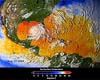 New York NY (SPX) Jan 11, 2006
The importance of remotely sensed data and technologies to support natural disasters has prompted attention and action in Washington. New initiatives and legislation authorizing appropriations to the remote sensing industry will be discussed at Strategic Research Institute's U.S. Commercial Remote Sensing Industry conference, scheduled for February 9-10, 2006 in Washington D.C. |
|
|

| The content herein, unless otherwise known to be public domain, are Copyright 1995-2006 - SpaceDaily.AFP and UPI Wire Stories are copyright Agence France-Presse and United Press International. ESA PortalReports are copyright European Space Agency. All NASA sourced material is public domain. Additionalcopyrights may apply in whole or part to other bona fide parties. Advertising does not imply endorsement,agreement or approval of any opinions, statements or information provided by SpaceDaily on any Web page published or hosted by SpaceDaily. Privacy Statement |