|
 |
 |
 |
 |
 |
 |
 |
 |

 |
Good reefs provide good coastal protection
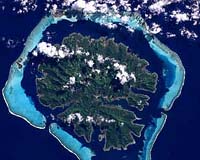
Princeton, N.J. (UPI) Dec 18, 2006 U.S. scientists say healthy coral reefs provide adjacent coastlines with more protection from tsunamis than do unhealthy or dead reefs. Spurred by the tsunami that devastated Indian Ocean coastlines two years ago, Princeton University scientists developed the first computer model of a tsunami strike against a reef-bounded shoreline, using a volcanic island as an example. The model, which demonstrates healthy reefs offer the coast at least twice as much protection as dead reefs, provides the first quantitative confirmation of a widely held theory regarding the value of living coral reefs as a defense against tsunamis. Geosciences Professor Michael Oppenheimer said his team's work will give scientists the ability to quantify how much a reef will benefit its stretch of coast. "Healthy reefs have rougher surfaces, which provide friction that slows the waves substantially in comparison with smoother, unhealthy ones," said Oppenheimer. "Scientists had never before studied this effect by the numbers, nor had they ever analyzed it over a wide variety of coastal shapes. This study provides yet another motivating factor for protecting the planet's coral reefs from degradation." The study appears in the Dec. 14 issue of the journal Geophysical Review Letters. Community Email This Article Comment On This Article Related Links Bringing Order To A World Of Disasters A world of storm and tempest When the Earth Quakes
 Tsunami Anniversary Special: 2 Years On
 Bangkok (AFP) Dec 18, 2006
Squabbling And Inaction Beset Tsunami Warning System Nearly two years after the tsunami, a regional warning system is beset by squabbling and inaction, officials and experts say, as individual countries instead scramble to implement their own schemes. |
|
|

| The content herein, unless otherwise known to be public domain, are Copyright 1995-2006 - SpaceDaily.AFP and UPI Wire Stories are copyright Agence France-Presse and United Press International. ESA PortalReports are copyright European Space Agency. All NASA sourced material is public domain. Additionalcopyrights may apply in whole or part to other bona fide parties. Advertising does not imply endorsement,agreement or approval of any opinions, statements or information provided by SpaceDaily on any Web page published or hosted by SpaceDaily. Privacy Statement |