|
 |
 |
 |
 |
 |
 |
 |
 |

 |
Global Warming Producing 150,000 Deaths Annually: WHO
Madison WI (SPX) Nov 16, 2005 In a recent chilling assessment, the World Health Organization (WHO) reported that human-induced changes in the Earth's climate now lead to at least 5 million cases of illness and more than 150,000 deaths every year. Temperature fluctuations may sway human health in a surprising number of ways, scientists have learned, from influencing the spread of infectious diseases to boosting the likelihood of illness-inducing heat waves and floods. Now, in a synthesis report featured on the cover of the journal Nature, a team of health and climate scientists at the University of Wisconsin-Madison and the WHO has shown that the growing health impacts of climate change affect different regions in markedly different ways. Ironically, the places that have contributed the least to warming the Earth are the most vulnerable to the death and disease higher temperatures can bring. "Those least able to cope and least responsible for the greenhouse gases that cause global warming are most affected," says lead author Jonathan Patz, a professor at UW-Madison's Nelson Institute for Environmental Studies. "Herein lies an enormous global ethical challenge." According to the Nature report, regions at highest risk for enduring the health effects of climate change include coastlines along the Pacific and Indian Oceans and sub-Saharan Africa. Large sprawling cities, with their urban "heat island" effect, are also prone to temperature-related health problems. Africa has some of the lowest per capita emissions of greenhouse gases. Yet, regions of the continent are gravely at risk for warming-related disease. "Many of the most important diseases in poor countries, from malaria to diarrhea and malnutrition, are highly sensitive to climate," says co-author Diarmid Campbell-Lendrum of the WHO. "The health sector is already struggling to control these diseases and climate change threatens to undermine these efforts." "Recent extreme climatic events have underscored the risks to human health and survival," adds Tony McMichael, director of the National Centre for Epidemiology and Population Health at the Australian National University. "This synthesizing paper points the way to strategic research that better assesses the risks to health from global climate change." The UW-Madison and WHO assessment appears only weeks before global leaders convene in Montreal during the first meeting of the Conference of Parties to the Kyoto Protocol, which came into effect in February 2005. Patz will also deliver the keynote address at a parallel WHO/Health Canada event. The United States - the world's top emitter of greenhouse gases - has yet to ratify the Kyoto treaty. Patz and his colleagues say their work demonstrates the moral obligation of countries with high per-capita emissions, such as the U.S. and European nations, to adopt a leadership role in reducing the health threats of global warming. It also highlights the need for large, fast-growing economies, such as China and India, to develop sustainable energy policies. "The political resolve of policy-makers will play a big role in harnessing the man-made forces of climate change," says Patz, who also holds a joint appointment with the UW-Madison department of Population Health Sciences. Scientists believe that greenhouse gases will increase the global average temperature by approximately 6 degrees Fahrenheit by the end of the century. Extreme floods, droughts and heat waves, such as Europe's 2003 heat wave, are likely to strike with increasing frequency. Other factors such as irrigation and deforestation can also affect local temperatures and humidity. According to the UW-Madison and WHO team, other model-based forecasts of health risks from global climate change project that:
- Flooding as a result of coastal storm surges will affect the lives of up to 200 million people by the 2080s. - Heat related deaths in California could more than double by 2100. - Hazardous ozone pollution days in the Eastern U.S. could increase 60 percent by 2050.
Community Email This Article Comment On This Article Related Links University of Wisconsin-Madison SpaceDaily Search SpaceDaily Subscribe To SpaceDaily Express Climate Science News - Modeling, Mitigation Adaptation
 The Forgotten Methane Source
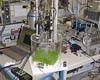 Heidelberg, Germany (SPX) Jan 11, 2006
In the last few years, more and more research has focused on the biosphere; particularly, on how gases which influence the climate are exchanged between the biosphere and atmosphere. Researchers from the Max Planck Institute for Nuclear Physics have now carefully analysed which organic gases are emitted from plants. |
|
|

| The content herein, unless otherwise known to be public domain, are Copyright 1995-2006 - SpaceDaily.AFP and UPI Wire Stories are copyright Agence France-Presse and United Press International. ESA PortalReports are copyright European Space Agency. All NASA sourced material is public domain. Additionalcopyrights may apply in whole or part to other bona fide parties. Advertising does not imply endorsement,agreement or approval of any opinions, statements or information provided by SpaceDaily on any Web page published or hosted by SpaceDaily. Privacy Statement |