|
 |
 |
 |
 |
 |
 |
 |
 |

 |
Global Space Charter To Include Disaster Management
Bangalore (SPX) Oct 06, 2005 The International Charter on Space and Major Disasters has decided to expand its scope of operations to cover more countries for reducing the impact of natural calamities, a senior official has said. The eight-member charter, celebrating its fifth anniversary in India, has decided to provide a unified system of space data acquisition and delivery to face natural calamities by roping in more nations to expand its membership and services. Charter board member Jean-Luc Bessis said here Wednesday: "Earth observation satellites provide comprehensive, synoptic and multi-temporal coverage of large areas in real time and at frequent intervals revealing the nature and impact of disasters. "We have proven the relevance of space in alleviating human suffering caused by such calamities," Bessis told the charter's organising committee meeting here. The charter was established in November 2000 with the European Space Agency (ESA), the Center National d'Etudes Spatiales (CNES) of France and the Canadian Space Agency (CSA) as founding members. Subsequently, the Indian Space Research Organisation (ISRO), the US National Oceanic and Atmospheric Administration (NOAA), the US Geological Survey (USGS), the Argentine space agency CONAE and Japan's Aerospace Exploration Agency (JAXA) joined the body. "We are currently reviewing the charter functioning to improve its global operations and integrate its various activities for optimal utilisation of our resources," ISRO chairman G. Madhavan Nair said at Wednesday's meeting. "We are also reviewing the capabilities of remote sensing for disaster management with feedback from real cases that occurred in the recent past, including the Asian tsunami and Hurricane Katrina." In 2004, the United Nations Outer Space Affairs (UNOOSA) agency became a cooperating body to promote the charter and involve various agencies responding to natural disasters and emergencies. During the past five years, the charter has been activated over 80 times to assist on emergencies like floods, fires, landslides, typhoons, volcanic eruptions, oil spills, tsunamis and earthquakes occurring the world over. "With a low response time of 38 to 48 hours and high reliability data, the charter has confirmed every time the effectiveness of space information for emergency management," said Bessis, who is also director of CNES. Incidentally, the charter was at the forefront in providing information during the recent Hurricane Katrina activation, where levees were breached and floodwaters submerged a part of New Orleans Aug 29. When the tsunami struck countries across South Asia and Southeast Asia Dec 26, 2004, charter member countries swung into action to release about 200 sensor images from their satellites. Community Email This Article Comment On This Article Related Links SpaceDaily Search SpaceDaily Subscribe To SpaceDaily Express Bringing Order To A World Of Disasters A world of storm and tempest When the Earth Quakes
 ISRO Developing Ocean Bottom Warning Sensors
 Bangalore, India (SPX) Jan 11, 2006
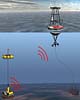
Indian Space Research Organisation is developing ocean bottom sensors that will help warn tsunami strikes in advance, the Press Trust Of India reports. |
|
|

| The content herein, unless otherwise known to be public domain, are Copyright 1995-2006 - SpaceDaily.AFP and UPI Wire Stories are copyright Agence France-Presse and United Press International. ESA PortalReports are copyright European Space Agency. All NASA sourced material is public domain. Additionalcopyrights may apply in whole or part to other bona fide parties. Advertising does not imply endorsement,agreement or approval of any opinions, statements or information provided by SpaceDaily on any Web page published or hosted by SpaceDaily. Privacy Statement |