|
 |
 |
 |
 |
 |
 |
 |
 |

 |
Global Science Project Launched To Improve Understanding Of The Human Brain
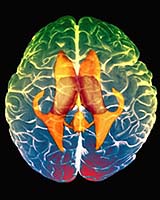
Stockholm, Sweden (SPX) Aug 12, 2005 Seven member countries of the OECD's Global Science Forum have launched a project to promote international collaboration among scientists and create new ways of sharing and analysing data to improve our understanding of how the human brain works. Advances in information technology are enabling scientists to develop increasingly sophisticated methods of measuring a brain's functions. To spur developments in this new research field, called neuroinformatics, the seven founding countries (the Czech Republic, Finland, Germany, Norway, Sweden, Switzerland and the United States) have set up the International Neuroinformatics Coordinating Facility (INCF). Other countries are expected to join the INCF in the coming months, with membership open to both OECD member and non-member countries. The host country for the headquarters of this new international body will be announced in Paris on Monday 28 November. Better understanding the human brain could lead to breakthroughs in the prevention and cure of nervous system disorders, such as Parkinson's or Alzheimer's disease, as well as new treatments for depression or schizophrenia. But to date it has proved difficult for the scientists and researchers working on thousands of different projects around the world to manage the vast amounts of data being collected, given that a single human brain has over 100 billion nerve cells and 5 million kilometers of neural interconnections. They then need to share these data and analyse them, often using different modeling tools across different computing platforms. To address these challenges and others, the International Neuroinformatics Coordinating Facility will:
Community Email This Article Comment On This Article Related Links OECD Global Science Forum SpaceDaily Search SpaceDaily Subscribe To SpaceDaily Express All About Human Beings and How We Got To Be Here
 New Technique Puts Brain-Imaging Research On Its Head
 St Louis MO (SPX) Dec 09, 2005
It's a scene football fans will see over and over during the bowl and NFL playoff seasons: a player, often the quarterback, being slammed to the ground and hitting the back of his head on the landing. |
|
|

| The content herein, unless otherwise known to be public domain, are Copyright 1995-2006 - SpaceDaily.AFP and UPI Wire Stories are copyright Agence France-Presse and United Press International. ESA PortalReports are copyright European Space Agency. All NASA sourced material is public domain. Additionalcopyrights may apply in whole or part to other bona fide parties. Advertising does not imply endorsement,agreement or approval of any opinions, statements or information provided by SpaceDaily on any Web page published or hosted by SpaceDaily. Privacy Statement |