|
 |
 |
 |
 |
 |
 |
 |
 |

 |
Global Hawk Passes Fuel Test
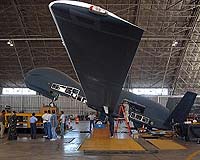
Edward AFB CA (SPX) Oct 23, 2007 The 452nd Flight Test Squadron pushed the RQ-4 Global Hawk Block 20 to its fuel system limits during a weeklong starvation test here in October. The testing involved tilting the aircraft to a 20-degree angle while running the aircraft out of fuel inside the weight and balance hangar. "The testing is very important," said Lt. Col. Andy Thurling, 452nd FLTS commander. "It allows us to know the aircraft's fuel requirements in case of a missed landing. This will allow for longer flights and more efficiency in the air." The Block 20 carries 1,000 pounds more payload and 6,000 pounds more fuel than the Block 10, said Capt. Stephen Leggiero, 773rd Test Squadron project engineer. Because of the increase in weight, additional fuel is required for the aircraft. This means an entirely new fuel cell configuration and fuel management system was necessary. Aside from the starvation testing, the team performed a weight and balance test on the aircraft to determine how changes in fuel weight change the aircraft's center of gravity. During the test, the Global Hawk was weighed then placed on blocks to allow additional ground clearance for the tail of the aircraft. After preparation, the team fired up the engines and began to tilt the aircraft. "We tilted the aircraft at the high 20-degree angle to simulate a go-around situation," said 2nd Lt. Garrison Lindholm, 773rd TS subsystem engineer. A go-around is where the aircraft misses an approach and is required to climb at a steeper attitude, he said. "We wanted to ensure that at the steep deck angle, the pumps would not create an engine flame out resulting in engine failure," Lieutenant Lindholm said. The main parameter for testing was weight, he said. The testers initially weighed the aircraft to determine its gross weight. The team then weighed the aircraft again as it began to show signs of starvation, Captain Leggiero said. This was to measure the amount of fuel in the tank when fuel starvation began. During the testing, the team used a synthetic fuel called Isopar-M instead of standard JP-8 fuel for safety purposes. The JP-8 has a lower flash point, which is the point where fuel ignites. "Overall, the testing went very smoothly," Captain Leggiero said. "It really highlights some of the fantastic infrastructure we have on base, and the wonderful people who pulled together to make things happen." Community Email This Article Comment On This Article Related Links UAV News - Suppliers and Technology
 BAE Systems Led UCAV Programme Breaks New Ground
 Warton, UK (SPX) Oct 17, 2007
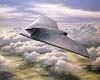
The cutting of first metal for the UK's 124m Taranis UCAV (unmanned combat air vehicle) technology demonstrator programme means that the BAE Systems led team remains well on track for first flight in 2010. In addition to the physical manufacture of the Taranis airframe now being underway, the design of the autonomous systems have also been finalised. |
|
|

| The content herein, unless otherwise known to be public domain, are Copyright 1995-2007 - SpaceDaily.AFP and UPI Wire Stories are copyright Agence France-Presse and United Press International. ESA Portal Reports are copyright European Space Agency. All NASA sourced material is public domain. Additional copyrights may apply in whole or part to other bona fide parties. Advertising does not imply endorsement,agreement or approval of any opinions, statements or information provided by SpaceDaily on any Web page published or hosted by SpaceDaily. Privacy Statement |