|
 |
 |
 |
 |
 |
 |
 |
 |

 |
Global Hawk Completes Wet Runway Test
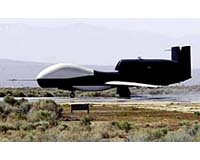
Edwards AFB CA (AFNS) May 16, 2006 The Global Vigilance Combined Test Force's 452nd Flight Test Squadron achieved an important milestone by completing wet runway taxi testing on the Global Hawk Unmanned Aerial Vehicle May 3. This was the first ever wet runway testing performed on an unmanned aircraft. The purpose of this test was to gather braking performance data on a wet runway and compare it to the existing dry runway data, evaluating many factors. "This work is significant for two reasons," said U.S. Air Force Lt. Col. Andy Thurling, 452nd Flight Test Squadron operations officer. "We have validated that our anti-skid braking is functioning properly on wet runways, but more importantly, we will use the data collected to provide pilots with braking performance information that they can use to decide whether or not a Global Hawk can land and stop safely on a runway when it's wet. "The Global Hawk may have to recover on a different runway or at a different base," he explained. "This could save a jet in the future." Data gathered during this testing will be used to demonstrate the Global Hawk's ability to operate in any weather as mandated by the Operational Requirements Document. The testing consisted of three phases. Phase I of the testing was executed with a lightweight configuration at three different taxi speeds. Phase II test points consisted of aborted takeoffs at two different aircraft weights. Phase III tests, the final phase of wet runway testing, employed a higher commanded deceleration rate to evaluate how the aircraft reacts during a maximum effort stop. "This is a milestone for UAV testing because we showed that a wet runway test can be done safely with an autonomous vehicle, even with all of the coordination required with multiple trucks and people on the runway at the same time," said Mark Buechter, Northrop Grumman's project pilot for this testing. "This has allowed us to develop better techniques which will be valuable to our follow-on efforts for landings on a wet runway." Community Email This Article Comment On This Article Related Links - UAV News - Suppliers and Technology
 VMU-2 Mechs Maintain Unmanned Aircraft
 Al Taqaddum, Iraq (AFNS) May 16, 2006
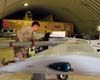
Echoes of wrenches turning and metal scraping together sound throughout the hangar bay, as the mechanics pull the engine off of an RQ-2B Pioneer unmanned aerial vehicle at Al Taqaddum, Iraq, May 2. |
|
|

| The content herein, unless otherwise known to be public domain, are Copyright 1995-2006 - SpaceDaily.AFP and UPI Wire Stories are copyright Agence France-Presse and United Press International. ESA PortalReports are copyright European Space Agency. All NASA sourced material is public domain. Additionalcopyrights may apply in whole or part to other bona fide parties. Advertising does not imply endorsement,agreement or approval of any opinions, statements or information provided by SpaceDaily on any Web page published or hosted by SpaceDaily. Privacy Statement |