|
 |
 |
 |
 |
 |
 |
 |
 |

 |
Global Atmospheric Carbon Level May Depend Primarily on Southern Ocean
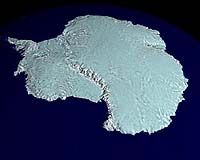
Washington DC (SPX) Jun 25, 2006 Circulation in the waters near the Antarctic coast may be one of the planet's critical means of regulating levels of carbon dioxide in the Earth's atmosphere, according to Princeton researchers. Though climate scientists have long debated the reasons behind the variation in atmospheric levels of carbon dioxide that occur over lengthy periods in Earth's history, the Princeton team may have found a clue to where the answer can be found. In a new research paper, the team reveals that the waters in the Southern Ocean below 60 degrees south latitude, the region that hugs the continent of Antarctica, play a far more significant role than was previously thought in regulating atmospheric carbon, and - in contrast to past theories - the waters north of this region do comparably little to regulate it. "Cold water that wells up regularly from the depths of the Southern Ocean spreads out on the ocean's surface along both sides of this dividing line, and we have found that the water performs two very different functions depending on which side of the line it flows toward," said Irina Marinov, the study's lead author. "While the water north of the line generally spreads nutrients throughout the world's oceans, the second, southward-flowing stream soaks up carbon dioxide, a greenhouse gas, from the air. Such a sharply-defined difference in function has surprised us. It could mean that a change to one side of the cycle might not affect the other as much as we once suspected." The research team, which also includes Princeton's Jorge Sarmiento as well as the National Oceanic and Atmospheric Administration's Anand Gnanadesikan and Robbie Toggweiler, will publish their results in today's (June 22) issue of the scientific journal, Nature. Marinov, who led the study while working in Sarmiento's lab, is currently pursuing postdoctoral research at the Massachusetts Institute of Technology as a NOAA Fellow in Climate and Global Change. The Southern Ocean has long been of interest to scientists, who have found that it influences the rest of the planet in many ways. Two years ago, Sarmiento's research team discovered that the nutrients in the world's oceans were dependent on the Southern Ocean's circulation pattern, but had not realized how the pattern affected the atmospheric carbon cycle. Scientists have also been aware that cold Antarctic waters have the ability to absorb atmospheric carbon dioxide, which could make the region one of the planet's lines of defense against rising greenhouse gas levels. These and other effects the Southern Ocean has on the Earth are not themselves new to science, but distinctions between one effect and another have been difficult to draw. "The new paper shows that carbon dioxide and nutrient flow are separated quite dramatically," said Sarmiento, a professor of geosciences. "What we are trying to do is understand better the balance of forces that help our planet maintain a steady environmental state, so we can anticipate what might cause that state to change. This paper helps us clarify how those forces interact." Changing levels of atmospheric carbon dioxide have long concerned the scientific community, as this well-known greenhouse gas could be a major influence on global warming. Marinov said the discovery could shed light on how the Earth reacted far back in history, which might offer clues to how it will behave in the future. "In the last ice age, for example, the atmosphere experienced very low levels of carbon dioxide, and no one is completely sure why," she said. "However, we now understand the Southern Ocean plays a large role in regulating how much of the gas gets dissolved in water, and how much remains in the atmosphere." The current study, she said, indicates that to better understand the Southern Ocean's effect on atmospheric carbon, scientists should pay greater attention to the Antarctic than to the more northerly sub-Antarctic region. "In the Antarctic, the circulation pattern moves the surface water carrying carbon dioxide deep into the ocean's depths, where the sequestered carbon could potentially be trapped for a long time," Marinov said. "According to the models we used, the deep Antarctic is the critical region where we need to concentrate our research." The team also indicated that the findings had implications for future research into carbon sequestration, a strategy for coping with increased atmospheric carbon dioxide levels. Some scientists propose that sequestration could one day capture atmospheric carbon and store it in places such as the deep ocean, thus mitigating humanity's greenhouse gas emissions. "An interesting idea of recent years is that we can sequester a lot of carbon if we dump iron into the ocean to encourage the growth of certain microorganisms, which incorporate carbon as they grow," Marinov said. "These organisms would then fall to the ocean floor after they die, taking the carbon with them. The overall effect would be to lower concentration of carbon in the surface waters, allowing more atmospheric carbon dioxide to dissolve into the sea. Our research has implications for future iron fertilization experiments, the focus of which we conclude should shift to the Antarctic." Marinov said that the findings were based strongly on the team's computer models, which have limitations that they will now concentrate on eliminating. "While we are confident about the paper's conclusions, we are always looking for ways to clarify our understanding of the Southern Ocean," she said. "Our model, for example, does not take into account the fact that the circulation patterns are strongest in the winter, when the Antarctic is covered in darkness and the phytoplankton cannot grow very much. It is important that we understand the impact of this process on atmospheric carbon dioxide through future research." This research was sponsored in part by the U.S. Department of Energy and NOAA's Postdoctoral Program in Climate and Global Change, administered by the University Corporation for Atmospheric Research. The Princeton team worked closely with NOAA's Geophysical Fluid Dynamics Lab, which is affiliated with Princeton through the graduate program in atmospheric and oceanic sciences. Climate research at Princeton is strongly enriched by the relationship with researchers in the laboratory on the Forrestal Campus, who collaborate on research, supervise Princeton graduate students and teach University courses. Community Email This Article Comment On This Article Related Links NOAA Climate Science News - Modeling, Mitigation Adaptation
 A Sign Of Global Warming Under The Olive Tree
 Exeter, England (UPI) Jun 26, 2006
Scientists say global warming has advanced to the stage where it is possible to plant an olive grove in Britain. That nation's first olive grove has been planted in Devon, adding weight to several studies that have suggested olives, vines and other warm-climate plants will be able to flourish in a substantially warmer Britain, The Independent reported. |
|
|

| The content herein, unless otherwise known to be public domain, are Copyright 1995-2006 - SpaceDaily.AFP and UPI Wire Stories are copyright Agence France-Presse and United Press International. ESA PortalReports are copyright European Space Agency. All NASA sourced material is public domain. Additionalcopyrights may apply in whole or part to other bona fide parties. Advertising does not imply endorsement,agreement or approval of any opinions, statements or information provided by SpaceDaily on any Web page published or hosted by SpaceDaily. Privacy Statement |