
 |
 |
 |
 |
 |
 |
 |
 |
 |

 |

Cancun, Mexico (AFP) Dec 7, 2010 Glaciers are melting fastest in southern South America and Alaska and communities urgently need to adapt to the meltdown, according to a UN report released Tuesday. Many low-lying glaciers may disappear over the coming decades, with the northwest United States, southwest Canada and the Arctic also affected, according to the report compiled by the United Nations Environment Program (UNEP) and scientists, presented at UN climate talks in Cancun, Mexico. Most glaciers -- which are formed by accumulations of snow and ice -- started shrinking around 150 years ago, but the rate of ice loss has increased significantly since the 1980s, the report said. "Averaged over their entire areas, within the period 1960 to 2003 glaciers in Patagonia and Alaska have thinned by approximately 35 meters and 25 meters, respectively," it said. Warmer temperatures due to climate change were a major factor in melting the glaciers. Another cause could be the deposit of soot, reducing the reflection of heat back into space, according to the report. The changed glaciers alter rain patterns and reduce water in rivers as well as food supply to nearby communities. "Adaptation is crucial and urgently needed to assist people who will be affected," said John Crump, UNEP polar issues coordinator, at a news conference. Though glaciers are shrinking overall worldwide, high levels of rain have actually increased the size of others, including in western Norway and New Zealand's South Island, the report said. And as glaciers melt, lakes can form and eventually burst, leading to flooding. Such floods have increased in the past 40 years, from China to Chile, the report said. Peru has siphoned off the water from lakes formed by melted glaciers while similar projects, which can be costly and technically challenging, have been tried by Nepal and Bhutan. Norway on Tuesday pledged more than 12 million dollars to help one major region where glaciers are melting -- the Himalayas. Madhav Karki, from the International Center for Integrated Mountain Development, pointed to aerial pictures of glaciers that he said were shrinking some five to 15 meters per year in the eastern Himalayas. The five-year investment aims to help communities, mainly in India, Pakistan and China, to adapt to changes in the glaciers they depend on and investigate why they are happening, said Norwegian Environment Minister Erik Solheim. "South Asia for me is probably the most vulnerable continent on the globe when it comes to climate change," he said. "Norway is at the opposite end of the spectrum." More than 40 percent of the world's floods takes place in Asia, and have affected nearly a billion people between 1999 and 2008, according to the UN. Pakistan this year was ravaged by floods that covered the size of England, killing more than 1,700 people and affecting more than 21 million more. Bangladeshi Environment Minister Hasan Mahmud expressed concern Tuesday over glacial melting affecting his delta country, which is ravaged annually by floods from the Himalayas. "If for any reason this is exacerbated, this will have a devastating impact, beyond our imagination," Mahmud said.
Share This Article With Planet Earth
Related Links Beyond the Ice Age

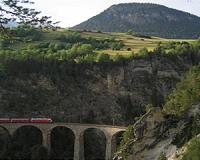 New Research Shows Rivers Cut Deep Notches In The Alps' Broad Glacial Valleys
Seattle WA (SPX) Dec 06, 2010 For years, geologists have argued about the processes that formed steep inner gorges in the broad glacial valleys of the Swiss Alps. The U-shaped valleys were created by slow-moving glaciers that behaved something like road graders, eroding the bedrock over hundreds or thousands of years. When the glaciers receded, rivers carved V-shaped notches, or inner gorges, into the floors of the gla ... read more |
|
|
| The content herein, unless otherwise known to be public domain, are Copyright 1995-2010 - SpaceDaily. AFP and UPI Wire Stories are copyright Agence France-Presse and United Press International. ESA Portal Reports are copyright European Space Agency. All NASA sourced material is public domain. Additional copyrights may apply in whole or part to other bona fide parties. Advertising does not imply endorsement,agreement or approval of any opinions, statements or information provided by SpaceDaily on any Web page published or hosted by SpaceDaily. Privacy Statement |


 del.icio.us
 Digg
Digg Reddit
 YahooMyWeb
 Google
 Facebook


