
 |
 |
 |
 |
 |
 |
 |
 |
 |

 |
Ghost-Imaging Could Have Satellite Application
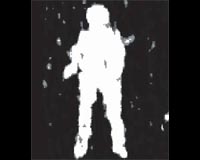
Air Force Office of Scientific Research Public Affairs Arlington VA (AFPN) Jun 27, 2008 Investigators funded by the Air Force Office of Scientific Research are conducting research under the name of "ghost-imaging," where a visual image of an object is created by means of light that has never interacted with the object. The new technology may result in a more versatile use of field sensors, and have space applications. University of Maryland, Baltimore Campus, professor (Dr.) Yanhua Shih initiated ghost-imaging research in 1995, by using entangled photons. In the experiment, one photon passed through stenciled patterns in a mask to trigger a detector, and another photon was captured by a second detector. Surprisingly, an image of the pattern between the two detectors appeared, which the physics community called ghost-imaging. In an article entitled "Reflection of a Ghost" that appeared in April's Physical Review, fellow researcher Dr. Keith Deacon indicated that ghost-imaging appears promising for future applications to satellite technology. Dr. Deacon said he believes ghost-imaging may enable a satellite to be equipped with a detector and that would be coupled with a second camera that would take images of the sun. That combination of technologies could generate ghost images of the Earth's surface, even if there are obstructing atmospheric conditions. Dr. Shih and fellow researchers, Drs. Ron Meyers and Keith Deacon of the U.S. Army Research Laboratory, have created ghost images this year, using thermal light. The three scientists combined the signals from two detectors, one that collected light from a toy soldier and another that took a digital picture of the light source. Ghost-imaging is similar to taking a flash-lit photo of an object using a normal camera. The image forms from photons that come out of the flash, bounce off the object, and then are focused through the lens onto photo-reactive film or a charge-coupled array. "But, in this case, the image is not formed from light that hits the object and bounces back," Dr. Shih said. "The camera collects photons from the light sources that did not hit the object, but are paired through a quantum effect with others that did. An image of the toy begins to appear after approximately a thousand pairs of photons are recorded. "My goal is to delve deeply into the physics of the ghost-imaging phenomenon, complete the theory of that technology and improve the technique toward practical, nonlocal sensing-imaging applications, especially for the Air Force," Dr. Shih said. Community Email This Article Comment On This Article Share This Article With Planet Earth
Related Links the missing link Understanding Time and Space
 Earth Physics Is Probably A Universal Thing
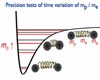 Bonn, Germany (SPX) Jun 24, 2008
The laws of nature are the same in the distant Universe as they are here on Earth, according to new research conducted by an international team of astronomers, including Christian Henkel from the Max Planck Institute for Radio Astronomy (MPIfR) in Bonn. |
|
|

| The content herein, unless otherwise known to be public domain, are Copyright 1995-2007 - SpaceDaily.AFP and UPI Wire Stories are copyright Agence France-Presse and United Press International. ESA Portal Reports are copyright European Space Agency. All NASA sourced material is public domain. Additional copyrights may apply in whole or part to other bona fide parties. Advertising does not imply endorsement,agreement or approval of any opinions, statements or information provided by SpaceDaily on any Web page published or hosted by SpaceDaily. Privacy Statement |
 del.icio.us
 Digg
Digg Reddit
 YahooMyWeb
 Google
 Facebook