|
 |
 |
 |
 |
 |
 |
 |
 |

 |
Get Ready For The Total Lunar Eclipse
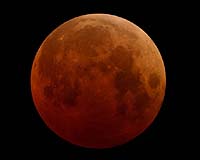
Greenbelt MD (SPX) Feb 20, 2008 In the late night hours of Feb. 20, 2008, a total lunar eclipse will dazzle the night sky. And this lunar eclipse may be worth staying up for, because it will be the last one until December 2010. A lunar eclipse occurs when the Earth lines up directly between the sun and the moon, casting a shadow over the moon's surface. The February 20, 2008 eclipse will last for nearly 3 and a half hours. For a full 50 minutes of that time the moon will be in totality - the period when the lunar surface is completely covered by the Earth's shadow. During an eclipse the moon changes color, going from a light gray color to an orange or deep red shade. This is totality. The moon takes on this new color because indirect sunlight is still able to pass through the Earth's atmosphere and cast a glow on the moon. The exact color that the moon appears depends on the amount of dust and clouds in the atmosphere. If there are extra particles in the atmosphere, from say a recent volcanic eruption, the moon will appear a darker shade of red. Residents of the Americas, Europe and Africa will have the best view of this eclipse. Here in the United States, the entire eclipse will be visible for the majority of the country. However, residents on the West Coast will miss out on watching the early stages of the eclipse, as it begins before moonrise. This Wednesday night, hope for clear skies, try to stay awake and enjoy a spectacular lunar eclipse. Community Email This Article Comment On This Article Related Links Solar and Lunar Eclipses at Skynightly
 Get ready for the eclipse that saved Columbus
 Paris (AFP) Feb 18, 2008
The Moon will turn an eerie shade of red for people in the western hemisphere late Wednesday and early Thursday, recreating the eclipse that saved Christopher Columbus more than five centuries ago. |
|
|

| The content herein, unless otherwise known to be public domain, are Copyright 1995-2007 - SpaceDaily.AFP and UPI Wire Stories are copyright Agence France-Presse and United Press International. ESA Portal Reports are copyright European Space Agency. All NASA sourced material is public domain. Additional copyrights may apply in whole or part to other bona fide parties. Advertising does not imply endorsement,agreement or approval of any opinions, statements or information provided by SpaceDaily on any Web page published or hosted by SpaceDaily. Privacy Statement |