|
 |
 |
 |
 |
 |
 |
 |
 |

 |
Geneticist Spells Out Consequences of Genetically Engineered Genes Escaping Riverside
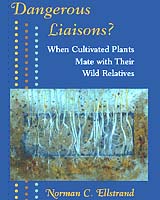
Riverside - Oct 01, 2003 Domesticated plants are the descendants of wild plants and the two are therefore closely related. What would be the consequences of sex between cultivated plants and their wild relatives? Would they perhaps make strange bedfellows? Norman C. Ellstrand, professor of genetics at UC Riverside and director of the Biotechnology Impacts Center, poses this question and provides some answers in his first book entitled "Dangerous Liaisons? When Cultivated Plants Mate With Their Wild Relatives" (288 pages, Johns Hopkins University Press, October 2003, edited by Samuel M. Scheiner). The title captures, in a few words, the idea that possible problems could result from spontaneous hybridization between cultivated plants and their wild relatives. "This is an issue of much interest to plant evolutionary geneticists, crop evolutionists, weed evolutionists," said Ellstrand. "It would appeal also to those interested in understanding the �gene flow' controversy associated with the field release of genetically engineered (transgenic) plants, to managers of endangered plant species, regulators of plant biotechnology, decision-makers, academics, students, and others concerned about the environment." Ellstrand will read from "Dangerous Liaisons?" At Back to the Grind, 3575 University Ave., Riverside (Tel: 909-784-0800), at 5:30 p.m. on October 21, 2003. A discussion of the book will follow the reading. The book introduces the reader to what is involved in the natural hybridization process. Ellstrand then describes what impact the hybridization between crops and their wild relatives has already had (e.g., evolution of weediness/invasiveness in the hybrids, the increased risk of extinction by hybridization if the wild plants are rare). The book ends with Ellstrand casting an eye on the future when he considers how we may better manage and monitor the escape of engineered genes into wild species. Ellstrand came to UC Riverside in 1979 after a year's postdoctoral appointment at Duke University. He received his Ph.D. in 1978 from the University of Texas at Austin. His awards include being named Fellow of the American Association for the Advancement of Science, 2000; Distinguished Speaker, 42nd Ecological Genetics Group Meeting, St. Andrews, United Kingdom, 1998; Fulbright Fellow, 1993; and a National Science foundation Mid-Career Fellowship in Environmental Biology, 1992. "I've always been fascinated by evolution -- and sex," said Ellstrand, "and that drew me to my field of research. I've also always wanted to have the experience of writing a book. I really wanted to write a novel, but I figured that first I had better try a book that would stand a better chance of getting accepted!" Ellstrand decided to write "Dangerous Liaisons?" Because of all of the controversies associated with the field release of transgenic plants. "The most frequently discussed controversy is the fact that engineered genes may move by pollen flow -- and subsequent sex -- into plant populations for which they were unintended, but not one book has yet emerged that focuses on this issue," he said. For this book, Ellstrand's style and delivery were inspired by Don Levin, his major professor at the University of Texas at Austin, Dave Nanney, his mentor at the University of Illinois, and Harriet Naden, his high school American Literature teacher. Ellstrand's recent favorite readings have been "Lords of the Harvest" by Dan Charles and "Instructions to the Cook: a Zen Master's Lessons in Living a Life that Matters" by Bernard Glassman and Rich Fields. What scholars have said of Ellstrand's "Dangerous Liaisons?": "In the stormy sea of debate over genetically modified organisms, Ellstrand's book is a safe and fascinating harbor of science-based opinion on cultivated plants in their larger gene pools. A visionary scientist and an ethical public servant, Ellstrand sets the quality standards for all who will follow." - Gary Paul Nabhan, Director, Center for Sustainable Environments, author of Coming Home to Eat: The Pleasures and Politics of Local Foods. "A well-written, objective account of the prevalence and roles of hybridization in plants, focusing on the relationships between crops and their wild and weedy relatives. This book is important reading for those concerned with the development of agriculture in the future, and the standards that ought to be applied when new strains of crops are developed. Norman Ellstrand has provided us with the best account of this important field." - Peter H. Raven, Director, Missouri Botanical Garden. "Buckle up for a rollicking ride through the world of plant sex. Norman Ellstrand, scientific investigator, is on the trail of a little-noticed phenomenon, the migration of plant genes across the boundaries of farmers' fields. He provides a comprehensive and even-tempered look at an old phenomenon that has suddenly acquired new relevance in this era of genetically engineered crops. An essential guide to a fascinating and often startling topic." - Daniel Charles, author of Lords of the Harvest: Biotech, Big Money, and the Future of Food. "This book brings science to bear on a controversial issue - the possible escape of engineered genes into wild species. Although Ellstrand's discussion is nuanced and sophisticated, his friendly and informal writing style makes it palatable. Ellstrand has produced the rare book that does not compromise the science yet remains a pleasure to read." - Loren Rieseberg, Indiana University "With insight, originality and extraordinary scholarship, Norman Ellstrand brings together classical and current knowledge about crop evolution, crop breeding and evolutionary ecology, weaving historical and ultra-contemporary themes into a single, comprehensive treatment. This book is a masterpiece that will be highly influential and widely cited." - Allison Snow, Ohio State University. Community Email This Article Comment On This Article Related Links University of California - Riverside SpaceDaily Search SpaceDaily Subscribe To SpaceDaily Express Dirt, rocks and all the stuff we stand on firmly
 Magnetic Reconnection Region Larger Than 2.5 Million Km Found In The Solar Wind
 Paris (ESA) Jan 12, 2006
Using the ESA Cluster spacecraft and the NASA Wind and ACE satellites, a team of American and European scientists have discovered the largest jets of particles created between the Earth and the Sun by magnetic reconnection. This result makes the cover of this week's issue of Nature. |
|
|

| The content herein, unless otherwise known to be public domain, are Copyright 1995-2006 - SpaceDaily.AFP and UPI Wire Stories are copyright Agence France-Presse and United Press International. ESA PortalReports are copyright European Space Agency. All NASA sourced material is public domain. Additionalcopyrights may apply in whole or part to other bona fide parties. Advertising does not imply endorsement,agreement or approval of any opinions, statements or information provided by SpaceDaily on any Web page published or hosted by SpaceDaily. Privacy Statement |