|
 |
 |
 |
 |
 |
 |
 |
 |

 |
General Still Hopeful On Trident Funding
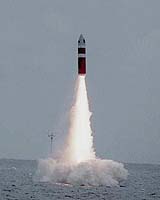
UPI Senior News Analyst Washington (UPI) Aug 08, 2006 The head of U.S. Strategic Command, Gen. James Cartwright, anticipates Congress will consider releasing additional funds for a new, conventionally armed Trident D-5 missile next year, once studies are done that show the weapon can be used with little risk of provoking nuclear retaliation. His comments, offered in an interview last week with InsideDefense.com, came in the wake of congressional action that may leave the Navy's proposed Conventional Trident Modification, or CTM, effort with just a fraction of the $127 million the Defense Department requested for fiscal year 2007, InsideDefense.com said. The U.S. Senate last week deferred a vote on its 2007 defense appropriations bill that provides no Fiscal Year 2007 funds to develop CTM, but offers $5 million to conduct a study on potential land- or air-based alternatives to the submarine-launched missile. The U.S. House of Representatives has passed a bill that would appropriate $30 million for CTM for the coming fiscal year, or less than one-quarter of the funds sought. The two chambers' bills are expected to be reconciled in conference committee in the coming months. All four key defense committees on Capitol Hill have expressed concern that the launch of a conventionally armed D-5 from a submarine that also carries the nuclear-tipped version of the same missile could prompt international misinterpretation that some experts say might lead to hasty retaliation against the United States, InsideDefense.com said.
Source: United Press International Community Email This Article Comment On This Article Related Links Learn about nuclear weapons doctrine and defense at SpaceWar.com Learn about nuclear weapons doctrine and defense at SpaceWar.com Learn about missile defense at SpaceWar.com All about missiles at SpaceWar.com Learn about the Superpowers of the 21st Century at SpaceWar.com
 US officials calm Indian fears over nuclear deal
 Kolkata, India, Aug 4, 2006
 A senior US official Friday tried to calm fears of political groups that a controversial America-India civilian nuclear energy deal would harm Indian interests. |
|
|

| The content herein, unless otherwise known to be public domain, are Copyright 1995-2006 - SpaceDaily.AFP and UPI Wire Stories are copyright Agence France-Presse and United Press International. ESA PortalReports are copyright European Space Agency. All NASA sourced material is public domain. Additionalcopyrights may apply in whole or part to other bona fide parties. Advertising does not imply endorsement,agreement or approval of any opinions, statements or information provided by SpaceDaily on any Web page published or hosted by SpaceDaily. Privacy Statement |