|
 |
 |
 |
 |
 |
 |
 |
 |

 |
GPS Upgrade Will Require Complicated Choreography
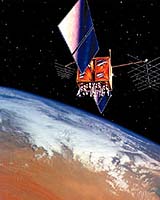
50th Space Wing Public Affairs Schriever AFB CO (SPX) Feb 06, 2007 Space professionals with the 2nd Space Operations Squadron have a daunting task ahead of them this summer: replacing the command-and-control system for GPS without any loss of "on-time, on-target" service to military or civil users. The new system, called the Architecture Evolution Plan, will provide 2nd SOPS with the tools to command upcoming generations of GPS satellites, said 1st Lt. Robert Kaegy, who is assigned to 2nd SOPS' AEP migration program. The upgrade consists of hardware and software to replace the original command-and-control system, which has operated since GPS' inception, said Capt. Brian O'Connell, GPS Modernization Flight commander. "The system will be capable of commanding and controlling the GPS constellation much as we do today, but planned software drops will also allow us to control the new II-F block of satellites when they're ready to fly," Captain O'Connell said. The system also lets operators link directly into the Air Force Satellite Control Network, more than doubling the number of sites they can use for satellite command and control. "This provides us with a greater capability to command our satellites, reduce commanding visibility gaps and potentially reduce our anomaly response time," Captain O'Connell said. The transition process won't be as simple as turning off one system and turning on another, however. "The core of the system is something called the Kalman Filter," Captain O'Connell said. "This system takes in data from our monitoring stations worldwide and uses this data to predict where each of the satellites will be in the future. This model is constantly updated, and the model in turn is uploaded to each vehicle." The Kalman Filter makes sure each GPS satellite is broadcasting a precise navigation and timing signal. The new system will have a new Kalman Filter--which means the system will have to be carefully aligned with the current system's Kalman Filter. "If we didn't do this, and we began uploading satellites with data from the AEP Kalman Filter, those vehicles would tell you that you're in a different place than the vehicles that still contain 'legacy' uploads," Captain O'Connell explained. "Clearly you wouldn't want your GPS receiver trying to tell you that you're in two different places." In addition, each GPS ground antenna and monitoring station must migrate to the new system. "This is a complicated piece of choreography," the captain said. The process of converting the constellation and ground system takes about five days. Community Email This Article Comment On This Article Related Links 2nd Space Operations Squadron GPS Applications, Technology and Suppliers GPS Applications, Technology and Suppliers
 China Puts New Navigation Satellite Into Orbit
 Xichang, China (XNA) Feb 05, 2007
China successfully put a navigation satellite into orbit early Saturday from the Xichang Satellite Launch Center in southwest China's Sichuan Province. The carrier rocket, Long March 3-A, blasted off at 0:28 a.m. ( Beijing Time). The satellite separated from the rocket about 24 minutes later. Data from the Xi'an satellite monitoring center showed that the satellite had accurately entered its orbit. |
|
|

| The content herein, unless otherwise known to be public domain, are Copyright 1995-2006 - SpaceDaily.AFP and UPI Wire Stories are copyright Agence France-Presse and United Press International. ESA PortalReports are copyright European Space Agency. All NASA sourced material is public domain. Additionalcopyrights may apply in whole or part to other bona fide parties. Advertising does not imply endorsement,agreement or approval of any opinions, statements or information provided by SpaceDaily on any Web page published or hosted by SpaceDaily. Privacy Statement |