|
 |
 |
 |
 |
 |
 |
 |
 |

 |
GPS Gives Howitzers A New Lease On Life
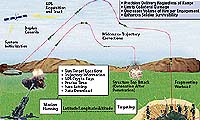
Tucson AZ (SPX) Nov 12, 2004 In a first-of-a- kind test earlier this month, the Raytheon Missile Systems and Bofors Excalibur team successfully fired a global positioning satellite-guided 155mm artillery shell, which guided to a target aim point 20 kilometers down range. The shell hit less than 11 feet from the aim point, well within the performance specification of Excalibur. "This test was a complete success," said Raytheon's Program Manager John Halvey. "We could not be happier. This success demonstrates the hard work and dedication that the team has strived for in order to put precision munitions into the warfighters hands at the earliest possible date." "The test's success marks a key milestone for fielding Excalibur in conjunction with the M777 howitzer in fiscal year 2006 to a Stryker Brigade of the 25th Infantry Division," said Lt. Col. William Cole, the Army's Excalibur product manager at Picatinny Arsenal, N.J. The program is a cooperative effort between the United States and Sweden. The Excalibur round was fired from the new 155mm light howitzer XM777, which will replace the M198 howitzer. Using a tactical propellant charge of Modular Artillery Charge System-Four, the round successfully executed navigation and guidance after GPS acquisition. The shell demonstrated proper navigation and guidance despite experiencing extreme G-force during gun launch. The shell completed numerous flight adjustments using its Control Actuator System and hit the target at a near vertical descent. This near vertical descent is ideal for urban warfare due to the limited space available between city structures. Excalibur's extreme accuracy will reduce collateral damage and make artillery a force multiplier for commanders on the ground. "The round's most significant accomplishment was successful navigation and GPS acquisition after a tactical gun launch," said Dave Martin, Raytheon's Guided Projectiles vice president. Excalibur uses GPS technology to deliver a variety of lethal payloads to a target up to 40 kilometers away when fired from a 39 caliber howitzer. The Excalibur program is a key element of the transformation of cannon artillery to provide responsive precision strike capability. This capability will offer high lethality, increased range, and low collateral damage, while greatly reducing the logistical burden for future deployed ground forces. Community Email This Article Comment On This Article Related Links Raytheon Raytheon- Excalibur Product Range SpaceDaily Search SpaceDaily Subscribe To SpaceDaily Express GPS Applications, Technology and Suppliers
 Galileo GIOVEA Using Marotta Equipment For Its Propulsion Systems
 Cheltenham, England (SPX) Jan 09, 2006
Marotta UK is pleased to announce that it designed, developed and qualified equipment for the cold gas propulsion systems on board the Galileo GIOVE-A, part of Europe's Galileo navigation program, successfully launched by Surrey Satellite Technology (SSTL). |
|
|

| The content herein, unless otherwise known to be public domain, are Copyright 1995-2006 - SpaceDaily.AFP and UPI Wire Stories are copyright Agence France-Presse and United Press International. ESA PortalReports are copyright European Space Agency. All NASA sourced material is public domain. Additionalcopyrights may apply in whole or part to other bona fide parties. Advertising does not imply endorsement,agreement or approval of any opinions, statements or information provided by SpaceDaily on any Web page published or hosted by SpaceDaily. Privacy Statement |