
 |
 |
 |
 |
 |
 |
 |
 |
 |

 |
GLAST Safely In Orbit And Getting Deployment Check-Ups
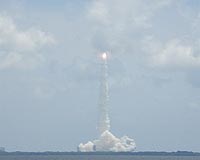
Greenbelt MD (SPX) Jun 20, 2008 Less than a week after launch, NASA's Gamma-ray Large Area Space Telescope, or GLAST, is safely up-and-running well in orbit approximately 350 miles (565 kilometers) above Earth's surface. GLAST was successfully launched aboard a Delta II rocket from Cape Canaveral Air Force Station in Florida at 12:05 p.m. EDT on Wednesday, June 11. For four weeks, engineers will continue to be busy around the clock turning on and checking out the various components on the spacecraft. "Things are looking good so far," said GLAST Deputy Project Scientist Julie McEnery from NASA's Goddard Space Flight Center, Greenbelt, Md. "We expect to turn the instruments on in about a week, and we can't wait to see the first gamma rays!" Two days after launch, both of GLAST's solar arrays were rotated successfully. The solar arrays are the "wings" of GLAST that utilize the Sun's energy to power the spacecraft. That same day, flight software controlled heaters were enabled. Those heaters are important because they help GLAST to operate in the cold of space. "Once the Large Area Telescope is operational, GLAST will survey the entire sky every three hours, using the sky survey control mode," said Kathy Turner, U.S. Department of Energy GLAST Program Manager, Germantown, Md. Sky survey is the primary science fine pointing control mode for the mission. On Monday, June 16, "Two star trackers are also now acquiring and identifying stars," said GLAST program manager Kevin Grady of NASA Goddard. "All systems continue to function well as the activation continues," he said. NASA's GLAST mission is an astrophysics and particle physics partnership, developed in collaboration with the U.S. Department of Energy, along with important contributions from academic institutions and partners in France, Germany, Italy, Japan, Sweden, and the U.S. Community Email This Article Comment On This Article Share This Article With Planet Earth
Related Links Space Telescope News and Technology at Skynightly.com
 Arecibo Joins Global Network To Create 6,000-Mile Telescope
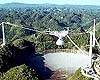 Ithaca, NY (SPX) Jun 12, 2008
On May 22, Arecibo Observatory in Puerto Rico joined other telescopes in North America, South America, Europe and Africa in simultaneously observing the same targets, simulating a telescope more than 6,800 miles (almost 11,000 kilometers) in diameter. |
|
|

| The content herein, unless otherwise known to be public domain, are Copyright 1995-2007 - SpaceDaily.AFP and UPI Wire Stories are copyright Agence France-Presse and United Press International. ESA Portal Reports are copyright European Space Agency. All NASA sourced material is public domain. Additional copyrights may apply in whole or part to other bona fide parties. Advertising does not imply endorsement,agreement or approval of any opinions, statements or information provided by SpaceDaily on any Web page published or hosted by SpaceDaily. Privacy Statement |
 del.icio.us
 Digg
Digg Reddit
 YahooMyWeb
 Google
 Facebook