Energy News  
From Ham-Radio To Galileo, Small Satellites Spell Success

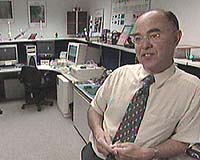
Sir Martin Sweeting, founder and CEO of SSTL.

Guilford, England (ESA) Nov 07, 2005
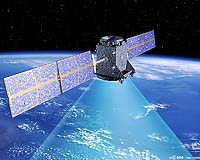
Next month should see the launch of the first Galileo satellite which will be paving the way for Europe's global positioning service. The GSTB-V2A spacecraft has been built by Surrey Satellite Technology (SSTL) in the UK, a company which was created in 1980. Euronews has been to visit the former university students who pioneered the use of small satellites.

"My interest in satellites started during the Apollo era in 1969," remembers Professor Martin Sweeting, today Chief Executive Officer of SSTL. "I was watching that just before I went to university." The University of Surrey in Guilford, 50 km from London, was to be the springboard for a spin-off company which now employs 250 people.

"In 1985 everybody was building bigger and bigger satellites and we were saying the contrary: smaller and smaller," recalls Sweeting. "People were saying it was an interesting but crazy idea with no future. But over the last 20 years, small satellites have offered a more flexible and economical way of getting to space. Today small satellites are a fashionable activity, and a major part of the space scene."

SSTL has been involved in over twenty different projects. Many of the first spacecraft built at Surrey were for amateur radio enthusiasts. But over the years, the company attracted a wide field of users, from Earth observation for countries without the financial resources to have conventional satellites, to specific civilian or military applications on demonstrator missions for major powers.

To bring down production costs and to cater for its clients� requirements, SSTL resorted to industrial techniques and materials used in the car industry or in computing � the COTS (Commercial off The Shelf) approach.

SSTL's reputation worldwide led to its selection by the European Space Agency to provide one of the two first satellites for the Galileo constellation.

"After we developed the 300 kg mini satellites, which was really stretching our capabilities upwards, we realised that we could respond to the ESA call, taking that platform, developing it a bit further and putting on some of the Galileo payload. It would offer a very low cost alternative to the conventional way of doing things."


Community
Email This Article
Comment On This Article

Related Links
Galileo
SSTL - GSTB-V2A
SpaceDaily
Search SpaceDaily
Subscribe To SpaceDaily Express
Microsat News and Nanosat News at SpaceMart.com


Memory Foam Mattress Review
Newsletters :: SpaceDaily :: SpaceWar :: TerraDaily :: Energy Daily
XML Feeds :: Space News :: Earth News :: War News :: Solar Energy News


Small Satellite Solutions From Scotland
Clyde, Scotland (SPX) Jan 12, 2006
Clyde Space are offering the growing ranks of small satellite manufacturers power subsystem solutions for their missions. Based in purpose built facilities on West of Scotland Science Park in Glasgow, Clyde Space has a range of power subsystems for missions from as little as 1W up to in excess of 2.5kW.


  • Delaware To Lead Program To Develop Very High Efficiency Solar Cell
  • British Government To Require Biofuels
  • China To Spend 180 Billion Dollars To Boost Renewable Energy Use
  • Beijing Presses Moscow To Build Oil Pipeline To China

  • Experts Blast Bush On India Nuke Deal
  • Duke Power May Build Nuclear Power Plants
  • Innovative 'Recycling' Project Could Reduce US Inventory Of Spent Nuclear Fuel
  • Feds Unveil Yucca Mountain Cleanup Plans

  • Getting To The TOPP Of Houston's Air Pollution
  • Scientists Seek Sprite Light Source


  • Oxfam: Europe's Farm Subsidies 'Unfair'
  • Farm Talks Collapse In Geneva
  • Defeating The 'Superpests'
  • Crop Scientists Improve "Supergrain" For Impoverished Farmers

  • GM Hires Russian Nuclear Scientists To Develop New Auto Technology
  • Japan Creates The World's Fastest Electric Sedan
  • Motorists To Pay 'Congestion' Charge Over Broader Swath Of London
  • Solar Cars Driving Towards A Hydrogen Future

  • UN Hails Musharraf's Fighter Jet Delay
  • Leader Envisions Future of Air Mobility Command
  • Manufacturing Academy - Big Boost for Aerospace
  • New Processor Makes Strike Eagle More Lethal

  • NASA plans to send new robot to Jupiter
  • Los Alamos Hopes To Lead New Era Of Nuclear Space Tranportion With Jovian Mission
  • Boeing Selects Leader for Nuclear Space Systems Program
  • Boeing-Led Team to Study Nuclear-Powered Space Systems

  • The content herein, unless otherwise known to be public domain, are Copyright 1995-2006 - SpaceDaily.AFP and UPI Wire Stories are copyright Agence France-Presse and United Press International. ESA PortalReports are copyright European Space Agency. All NASA sourced material is public domain. Additionalcopyrights may apply in whole or part to other bona fide parties. Advertising does not imply endorsement,agreement or approval of any opinions, statements or information provided by SpaceDaily on any Web page published or hosted by SpaceDaily. Privacy Statement