|
 |
 |
 |
 |
 |
 |
 |
 |

 |
Francis Crick Remembered
Moffett Field CA (SPX) Aug 02, 2004 The British molecular biologist Francis Harry Crick died on Wednesday at the age of 88. Crick changed our understanding of life when, in 1953, he and James Watson announced that DNA came packaged in an elegant double helix structure. Crick reportedly claimed they had found 'the secret of life,' and many scientists agree. The double-helix structure explained how genetic material replicated through nitrogenous base pair bonds. Some see this as the most important development in biology in the 20th century, and Watson and Crick were awarded the Nobel Prize in Medicine for their discovery in 1962. Crick was not content to sit back on his laurels after winning one of the top prizes in science, however. He continued to study the mysteries of life, such as the nature of consciousness, or the possibility that RNA preceded the development of DNA. In 1973, he and the chemist Leslie Orgel published a paper in the journal Icarus suggesting that life may have arrived on Earth through a process called 'Directed Panspermia.' The Panspermia hypothesis suggests that the seeds of life are common in the universe and can be spread between worlds. This idea originated with the Greek philosopher Anaxagoras, and was later promoted by the Swedish physicist Svante Arrhenius and the British astronomer Fred Hoyle. Versions of this hypothesis have survived to the present day, with the discovery of proposed 'fossil structures' in the martian meteorite ALH84001. 'Directed Panspermia' suggests that life may be distributed by an advanced extraterrestrial civilization. Crick and Orgel argued that DNA encapsulated within small grains could be fired in all directions by such a civilization in order to spread life within the universe. Their abstract in the 1973 Icarus paper reads: "It now seems unlikely that extraterrestrial living organisms could have reached the earth either as spores driven by the radiation pressure from another star or as living organisms imbedded in a meteorite." "As an alternative to these nineteenth-century mechanisms, we have considered Directed Panspermia, the theory that organisms were deliberately transmitted to the earth by intelligent beings on another planet." "We conclude that it is possible that life reached the earth in this way, but that the scientific evidence is inadequate at the present time to say anything about the probability. We draw attention to the kinds of evidence that might throw additional light on the topic." Crick and Orgel further expanded on this idea in their 1981 book, 'Life Itself.'. They believed there was little chance that microorganisms could be transported between planets and across interstellar distances by random accident. But a technological civilization could direct panspermia by stocking a spacecraft with a genetic starter kit. They suggested that a large sample of different microorganisms with minimal nutritional needs could survive the long journey between worlds. Many scientists are critical of the Panspermia hypothesis, because it does not try to answer the question of how life first originated. Instead, it passes the responsibility on to another place and another time, offering at best a partial solution to the question. Crick and Orgel suggested that Directed Panspermia might help resolve some mysteries about life's biochemistry. For instance, it could be the reason why the biological systems of Earth are dependent on molybdenum, when the chemically similar metals chromium and nickel are far more abundant. They suggested that the seeds for life on Earth could have originated from a location far richer in molybdenum. Other scientists have noted, however, that in seawater molybdenum is more abundant than either chromium or nickel. Coming full circle to his groundbreaking discovery of DNA's structure, Crick wondered, if life began in the great "primeval soup" suggested by the Miller/Urey experiment, why there wouldn't be a multitude of genetic materials among the different life forms. Instead, all life on Earth shares the same basic DNA structure. Crick and Orgel wrote in their book 'Life Itself,' "an honest man, armed with all the knowledge available to us now, could only state that in some sense, the origin of life appears at the moment to be almost a miracle, so many are the conditions which would have had to have been satisfied to get it going." Community Email This Article Comment On This Article Related Links SpaceDaily Search SpaceDaily Subscribe To SpaceDaily Express Dirt, rocks and all the stuff we stand on firmly
 Magnetic Reconnection Region Larger Than 2.5 Million Km Found In The Solar Wind
 Paris (ESA) Jan 12, 2006
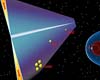
Using the ESA Cluster spacecraft and the NASA Wind and ACE satellites, a team of American and European scientists have discovered the largest jets of particles created between the Earth and the Sun by magnetic reconnection. This result makes the cover of this week's issue of Nature. |
|
|

| The content herein, unless otherwise known to be public domain, are Copyright 1995-2006 - SpaceDaily.AFP and UPI Wire Stories are copyright Agence France-Presse and United Press International. ESA PortalReports are copyright European Space Agency. All NASA sourced material is public domain. Additionalcopyrights may apply in whole or part to other bona fide parties. Advertising does not imply endorsement,agreement or approval of any opinions, statements or information provided by SpaceDaily on any Web page published or hosted by SpaceDaily. Privacy Statement |