|
 |
 |
 |
 |
 |
 |
 |
 |

 |
Fourth European Conference On Space Debris To Address Key Issues
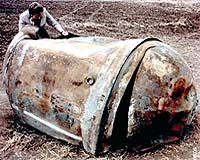
Darmstadt, Germany (ESA) Apr 08, 2005 The European Space Agency hosts the 4th European Conference on Space Debris, 18-20 April, at ESA's Space Operations Centre (ESOC) in Darmstadt, Germany. The conference, one of the world's most important events dedicated to space debris issues, is co-sponsored by the British, French, German and Italian space agencies (BNSC, CNES, DLR, ASI), the Committee on Space Research (COSPAR) and the International Academy of Astronautics (IAA), and is expected to attract over 200 leading experts from all over the world. Space debris has recently been attracting increasing attention not only due to the growing recognition of the long-term need to protect the commercially valuable low-Earth and geosynchronous orbital zones (LEO and GEO), but also due to the direct threat that existing debris poses to current and future missions. While commercial and scientific uses of space have expanded across a wide range of activities, including telecommunications, navigation, Earth observation and science, space debris has continued to accumulate, significantly threatening future missions. Speakers at the conference will present results from research on space debris, assist in defining future directions for research, consolidate debris environment models, identify methods of debris mitigation, assess debris-related risks and their control, devise protective measures and discuss policy issues, regulations and legal aspects. The conference will also promote the ongoing discussions taking place in a number of organisations, including the Inter-Agency Space Debris Coordination Committee (IADC) and the Scientific and Technical Subcommittee of the UN Committee on the Peaceful Uses of Outer Space (UNCOPUOS). On 20 April a press conference will be held with an international panel of debris experts. The conference will be followed immediately by the 23rd meeting of the IADC, which currently has 11 members, including its founders: ESA, NASA, the Russian Space Agency (Roskosmos) and Japan (JAXA). Experts will exchange results on space debris research, identify options for space debris mitigation, and discuss joint research activities. The IADC meeting is for members only. Community Email This Article Comment On This Article Related Links ESA Space Debris Research Space Debris 2005 SpaceDaily Search SpaceDaily Subscribe To SpaceDaily Express Space Tourism, Space Transport and Space Exploration News
 NASA Refines Design For Crew Exploration Vehicle
 Washington DC (SPX) Jan 12, 2006
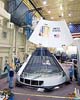
NASA's Constellation Program is making progress toward selecting a prime contractor to design, develop and build the Crew Exploration Vehicle (CEV), America's first new human spacecraft in 30 years. |
|
|

| The content herein, unless otherwise known to be public domain, are Copyright 1995-2006 - SpaceDaily.AFP and UPI Wire Stories are copyright Agence France-Presse and United Press International. ESA PortalReports are copyright European Space Agency. All NASA sourced material is public domain. Additionalcopyrights may apply in whole or part to other bona fide parties. Advertising does not imply endorsement,agreement or approval of any opinions, statements or information provided by SpaceDaily on any Web page published or hosted by SpaceDaily. Privacy Statement |