|
 |
 |
 |
 |
 |
 |
 |
 |

 |
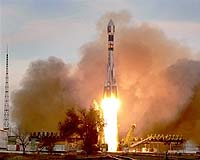
Four Globalstar satellites put into orbit by Russian rocket
Paris (AFP) Oct 21, 2007 Four Globalstar telecommunications satellites blasted off Sunday from the Baikonur space center in Kazakhstan atop a Russian Soyuz rocket and were successfully placed into orbit, an Arianespace spokesman said. The first generation of these satellites were launched in 1999 by Starsem, the Russian-European subsidiary of Arianespace from Baikonur. Four more satellites were put in orbit in May this year. Globalstar, based in California, provides communication services to businesses, government agencies and individuals. A second constellation of 24 telecommunications satellites is expected to go into orbit starting in 2009, using Russian Soyuz rockets but launched from a South American space center in French Guiana. Community Email This Article Comment On This Article Related Links Satellite Constellation - multiple satellite deployments in LEO and Beyond
 Starsem To Loft Four New Globalstars October 25 Aboard Soyuz Carrier Rocket
 Moscow (RIA Novosti) Oct 03, 2007
Russia is preparing to launch four U.S. Globalstar satellites into orbit on board a Soyuz-FG carrier rocket from the Baikonur space center in Kazakhstan on October 25, the space agency said Thursday. |
|
|

| The content herein, unless otherwise known to be public domain, are Copyright 1995-2007 - SpaceDaily.AFP and UPI Wire Stories are copyright Agence France-Presse and United Press International. ESA Portal Reports are copyright European Space Agency. All NASA sourced material is public domain. Additional copyrights may apply in whole or part to other bona fide parties. Advertising does not imply endorsement,agreement or approval of any opinions, statements or information provided by SpaceDaily on any Web page published or hosted by SpaceDaily. Privacy Statement |