|
 |
 |
 |
 |
 |
 |
 |
 |

 |
Forest Fire Sensor Inspired By Nature
Bonn Germany (SPX) Jul 29, 2004 They are what fire fighters have long been calling for: low-cost and highly sensitive infrared sensors that automatically monitor large forest areas and trigger an early warning in the event of fire. Zoologist at the University of Bonn have taken an important step towards this goal. They have constructed a forest fire sensor which could be produced more cheaply than commercially available infrared detectors, although it is not yet as sensitive. In identifying a principle of measurement previously unknown in nature and in technology, the scientists have taken the idea from a small insect: the jewel beetle, which lays its eggs in the wood of freshly burned trees, is said to be able to detect forest fires from a distance of 80 kilometres. The biologists now want to perform more tests on their little model to determine the limits of this new method of measurement. This "fire beetle" loves burnt wood: immediately after woodland blazes the females fly in from far and wide, climb up the trees and lay their eggs in the smouldering bark. Since most other insect species tend to avoid freshly scorched areas, the jewel beetle larvae can develop with hardly any competition. The adult insects owe their sense of burning to clever sensory organs located on their underside. These organs are pits containing a large number of receptors ("sensilla") that are extremely responsive precisely to the infrared (IR) radiation that comes from a forest fire. "Interestingly, these infrared feelers are modified mechanosensors," explains Bonn zoologist Dr. Helmut Schmitz, "and present us with a completely novel method of monitoring IR radiation." The finger-shaped protrusion of an individual mechanoreceptor is inserted in a tiny sphere made of "cuticula" - the same material that forms an insect's armour. The cuticula sphere surrounds the pressure-sensitive "finger" like a clamp. "Now, our jewel beetle's cuticula is particular good at absorbing thermal radiation with a wavelength of about three micrometers - exactly the radiation that is typically emitted by a fierce forest fire. So when a fire occurs the sphere heats up, expands and, in this way, directly stimulates the mechanoreceptor," says the research scientist. Since the atmosphere is pervious to infrared at these wavelengths, the insects can identify potential breeding grounds from a long distance. Assisted by his doctoral candidate Martin M�ller, Schmitz has reconstructed the sensor using the simplest of components. Instead of the cuticula sphere, the replica uses a polyethylene platelet. Polyethylene absorbs infrared radiation in a similar spectrum as cuticula and also expands in response. This expansion is measured by the scientists. "The whole thing already works quite well, although commercially available IR sensors are better by a factor of 100," says Schmitz, who is nevertheless convinced of that the system can be perfected: "With our simple prototype we are only at the beginning of what is possible." The zoologist is currently looking for industrial partners to work out the specifications of his sensor and mature the technology. To determine where the limits of this monitoring principle lie he also wants to make precise measurements of his biological model. "There are indications in the literature that the jewel beetle has detected forest fires from distances of up to 80 kilometres; but the data has never been checked and therefore remains unsound." In any case, the beetle is only the starting point: "Our aim is to test all known infrared-sensitive animals to find out how sensitive their sense of thermal radiation is." However, this gift does not appear to be very common in the animal kingdom. Apart from three species of beetle, so far scientists only know of some snakes - the pit viper and giant constrictor - that have genuine IR-sensing organs. In fact, since the beginning of last year a snake experts, Dr. Guido Westhoff, has been collaborating with Helmut Schmitz at Bonn's Institute of Zoology. He is examining the heat sense of reptiles in a project funded by the Deutsche Forschungsgemeinschaft (DFG). Nowhere else in the world are all the known IR-sensitive animals being studied under the roof of one research institute. Community Email This Article Comment On This Article Related Links Uni Bonn SpaceDaily Search SpaceDaily Subscribe To SpaceDaily Express Earth Observation News - Suppiliers, Technology and Application
 New Legislation Initiated To Support Commercial Remote Sensing Industry
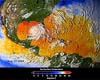 New York NY (SPX) Jan 11, 2006
The importance of remotely sensed data and technologies to support natural disasters has prompted attention and action in Washington. New initiatives and legislation authorizing appropriations to the remote sensing industry will be discussed at Strategic Research Institute's U.S. Commercial Remote Sensing Industry conference, scheduled for February 9-10, 2006 in Washington D.C. |
|
|

| The content herein, unless otherwise known to be public domain, are Copyright 1995-2006 - SpaceDaily.AFP and UPI Wire Stories are copyright Agence France-Presse and United Press International. ESA PortalReports are copyright European Space Agency. All NASA sourced material is public domain. Additionalcopyrights may apply in whole or part to other bona fide parties. Advertising does not imply endorsement,agreement or approval of any opinions, statements or information provided by SpaceDaily on any Web page published or hosted by SpaceDaily. Privacy Statement |