
 |
 |
 |
 |
 |
 |
 |
 |
 |

 |
Fleets Can Save Money And Reduce Emissions
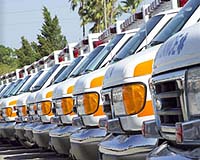
San Diego CA (SPX) Jun 26, 2008 Fleets can reduce harmful greenhouse emissions while lowering operating costs, according to a new paper by Networkcar, a leader in wireless fleet management. The new paper, entitled "Go Green and Save Green," details the six areas that can significantly reduce fuel consumption and lower air pollution. The paper also provides examples of how small, medium and large fleets can decrease fuel usage from between 3,000 to 58,000 gallons per year while reducing carbon dioxide emissions from between 54,000 to 1.3 million pounds annually. "Lowering vehicle emissions is closely tied to reducing fuel costs and improving operating efficiency. To have the most impact, fleets need to go beyond systems that only monitor GPS location to those that also monitor engine diagnostics," said Keith Schneider, president of Networkcar. "Wireless fleet management systems such as Networkfleet that connect directly to the vehicle's engine computer can provide information such as exact fuel consumption, mileage, speed and idle time for each vehicle. This information is essential to achieving a green fleet." The paper identifies the six ways that wireless fleet management systems with diagnostic monitoring can reduce emissions and lower costs, including: 1. Reduce idle time: Excessive idling wastes fuel and increases vehicle emissions. Systems can be used to track and report idle time and compare miles per gallon across vehicles. 2. Improve vehicle maintenance: Receiving instant notification of any engine problems and automatic odometer readings help fleets ensure that vehicles run smoothly and use less fuel. 3. Reduce speeding: The ability to monitor actual speed provides fleet managers with the precise information needed to counsel drivers and reduce speeding, which causes unnecessary fuel consumption. 4. Reduce unauthorized vehicle usage: Fleets can reduce unnecessary vehicle use by monitoring vehicle location and hours of operation. 5. Optimize routing: By analyzing driving patterns and using historical location reports, fleets can choose routes that reduce miles and optimize driving schedules. 6. Continuous emissions monitoring: Vehicles in compliance with EPA requirements use less fuel than those that are non-compliant. In California, fleets with wireless emissions monitoring can eliminate physical smog checks at smog checking facilities, saving time and money. Community Email This Article Comment On This Article Share This Article With Planet Earth
Related Links "Go Green and Save Green - Wireless Fleet Management Systems Cuts Emissions While Reducing Operating Costs" Networkcar GPS Applications, Technology and Suppliers
 Navtones Signs Kim Cattrall For Celebrity Turn-By-Turn Navigation
 Los Angeles CA (SPX) Jun 26, 2008
Navtones has announced the exclusive worldwide release of A-list actress, Kim Cattrall, as a premium voice download for all TomTom portable navigation devices. |
|
|

| The content herein, unless otherwise known to be public domain, are Copyright 1995-2007 - SpaceDaily.AFP and UPI Wire Stories are copyright Agence France-Presse and United Press International. ESA Portal Reports are copyright European Space Agency. All NASA sourced material is public domain. Additional copyrights may apply in whole or part to other bona fide parties. Advertising does not imply endorsement,agreement or approval of any opinions, statements or information provided by SpaceDaily on any Web page published or hosted by SpaceDaily. Privacy Statement |
 del.icio.us
 Digg
Digg Reddit
 YahooMyWeb
 Google
 Facebook