|
 |
 |
 |
 |
 |
 |
 |
 |

 |
First Image From Canadian Camera Aboard FUSE
Saint-Hubert, Quebec, July 21, 1999 - The Canadian Space Agency announced today the successful operation of new space equipment in orbit. Canadian cameras on the orbiting FUSE telescope, which was launched by NASA on June 24th, have passed their first tests with flying colours. FUSE (Far-Ultraviolet Spectroscopic Explorer) is a joint astronomy mission of the United States, Canada, and France. Last week saw the first pictures from the Canadian-designed and built Fine Error Sensor (FES) Cameras. They represent a major milestone in activating the new FUSE space telescope. The two FES cameras on board FUSE will be used to identify target objects and then to keep the satellite pointing very precisely, allowing measurement of the ultraviolet (UV) light from the targets. The FES images were the first confirmation that the cameras are working well, and providing images of excellent quality, as sharp and sensitive as needed for their precise guiding tasks. As a result the satellite is now being navigated using the Canadian camera images. "We were very happy to see the first images from the FES cameras," said Barry Wetter, Director General of the Canadian Space Agency's Space Science Program. "The successful operation of the FES is critical to the success of mission and now that it has been confirmed, we look forward to the activation of the main FUSE instrument." The first picture was a one-second exposure of a star field in the constellation Pavo (The Peacock), visible only from the southern hemisphere. It shows many stars, the faintest of which are about 10,000 times fainter than can be seen by the naked eye, and two extended objects that are distant galaxies. The Canadian project scientist for FUSE is Dr John Hutchings from the Victoria Laboratory of the National Research Council of Canada. "I am delighted that our instrument is performing this well," said Dr. Hutchings, "and look forward to starting the exciting UV science observations in the next few weeks." The FES cameras were built by COM DEV International of Cambridge, Ontario, under contract to the Canadian Space Agency. NRC scientists from Victoria worked closely with them to design and test the cameras. Canadian scientists are also working as part of the JHU operations team in Baltimore, Maryland. COM DEV also developed the Instrument Data System, the computer system that controls the FUSE telescope, under a separate contract with JHU. During a typical observation with FUSE, the light from one star is directed into the scientific instrument for analysis, while the positions of nearby stars in FES images are monitored to keep the spacecraft steady while the UV measurements are taken. To permit long time exposures, the spacecraft must be held very steady -- the maximum wobble in pointing position that can be tolerated is equivalent to the size of a loonie seen from a distance of 10 km. [NOTE: A loonie is a nickname for the Canadian $1 coin, which measures 26.50mm across. - A.Y.] The FUSE telescope measures far-UV light in a range undetectable using the Hubble Space Telescope. FUSE data will be used to study many stars and galaxies, as well as the tenuous gas and dust that occupies the vast regions of space between the stars. As partners in the mission, Canadian scientists will perform their own observing programs with the telescope. The first UV observations are expected to begin in a few weeks, after careful checkout of the main instruments. FUSE is a NASA astronomy mission developed and operated by the Johns Hopkins University in collaboration with the University of Colorado, the University of California-Berkeley, the space agencies of Canada (CSA) and France (CNES), and corporate contractors. This year, the Canadian Space Agency celebrates ten years of excellence. Since its creation in 1989, the Agency has pursued a mission to develop and apply space knowledge for the benefit of Canadians and humanity.
FUSED at SpaceDaily
Related Sites
Email This Article Comment On This Article Related Links Space
 Satellite Launch To Boost DTH In India
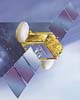 Calcutta, India (SPX) Dec 28, 2005
The successful launch Thursday of India's heaviest satellite from spaceport of Kourou in French Guyana may have boosted the country's space research efforts to yet another level, but it has also lifted the spirits of at least three Direct-To-Home televisions broadcasters, one of which has been waiting for years to launch its services in India.
--------------------------------------------------------- It's new. And it's downright terrific! Celestron's CPC Schmidt-Cassegrain telescope is the scope you've been waiting for! It offers new alignment technology, advanced engineering, and bold new design at a new, low price! In fact, Celestron's Professional Computerized (CPC) scope with revolutionary SkyAlign Alignment Technology redefines everything that amateur astronomers are looking for. It offers quick and simple alignment, GPS technology, unsurpassed optical quality, ease of use, advanced ergonomics, enhanced computerization and, most important, affordability. Want to view M-31 tonight? One button takes you there!
Shop for telescopes online at Telescopes.com! today!
|
|
|

|
|
|
|
|
|
|
|
|
|
|
|
| The content herein, unless otherwise known to be public domain, are Copyright 1995-2006 - SpaceDaily.AFP and UPI Wire Stories are copyright Agence France-Presse and United Press International. ESA PortalReports are copyright European Space Agency. All NASA sourced material is public domain. Additionalcopyrights may apply in whole or part to other bona fide parties. Advertising does not imply endorsement,agreement or approval of any opinions, statements or information provided by SpaceDaily on any Web page published or hosted by SpaceDaily. Privacy Statement |