|
 |
 |
 |
 |
 |
 |
 |
 |

 |
First Chinese Unmanned Lunar Mission Set For 2007
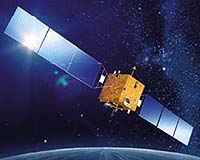
Beijing (XNA) Aug 17, 2005 China is planning a three-stage programme of unmanned lunar missions, with the aim of bringing back rock samples from the moon in around 2017, aerospace officials said yesterday. "If there are no major problems, China's first unmanned satellite to the moon will be launched in 2007," said Luan Enjie, chief commander of the country's lunar exploration programme. This is the second time in a week Chinese scientists have confirmed the plan. On August 9, Ye Peijian, chief designer of the orbiter, said research and development of the satellite is going smoothly. Luan made the latest remarks at a ceremony yesterday in Beijing to kick off a one-and-half-month campaign to solicit designs for a moon exploration programme logo. The lunar orbiter, dubbed Chang'e-1 (CH-1), is named after the Chinese legend of a young fairy who flies to the moon. The orbiter weighs more than 2 tons and, if all goes to plan, will fly for a year, Luan said. As the first phase of a three-part lunar probe programme, the unmanned fly-by mission will collect information for three-dimensional mapping of the moon's surface as well as studying its mineral content. In the second phase, scientists plan to put a "lunar vehicle" on the moon to explore the lunar surface in around 2012. Through the wheeled robotic explorer, scientists hope to get to know the moon's environment and analyze the composition of lunar rocks, Luan said. Another soft-lander will be launched around 2017, with the mission of bringing back lunar samples. Luan did not reveal when China will be sending a man on the moon, but said the 2017 mission would provide data for manned lunar missions and for choosing a site for a lunar base. To accomplish the missions, scientists will have to solve a chain of problems regarding satellites, rockets and tracking systems, he said. Sun Laiyan, director of the China National Space Administration, yesterday said the lunar missions constituted a new landmark in the country's space programme after the launching of satellites and manned spacecraft. "The lunar probe indicates China has taken an important step towards exploration of deeper space," Sun said. The moon will provide a platform from which to explore further into space, he said earlier. China launched its lunar exploration programme belatedly. The former Soviet Union launched Luna 10, the world's first spacecraft to go into lunar orbit on April 4, 1966, a few months before the US launched Lunar Orbiter 1. Source: Xinhua News Agency Community Email This Article Comment On This Article Related Links SpaceDaily Search SpaceDaily Subscribe To SpaceDaily Express Mars News and Information at MarsDaily.com Lunar Dreams and more
 SMART 1 Uses New Imaging Technique In Lunar Orbit
 Paris, France (ESA) Dec 28, 2005
ESA's SMART-1 spacecraft has been surveying the Moon's surface in visible and near-infrared light using a new technique, never before tried in lunar orbit. |
|
|

| The content herein, unless otherwise known to be public domain, are Copyright 1995-2006 - SpaceDaily.AFP and UPI Wire Stories are copyright Agence France-Presse and United Press International. ESA PortalReports are copyright European Space Agency. All NASA sourced material is public domain. Additionalcopyrights may apply in whole or part to other bona fide parties. Advertising does not imply endorsement,agreement or approval of any opinions, statements or information provided by SpaceDaily on any Web page published or hosted by SpaceDaily. Privacy Statement |