|
 |
 |
 |
 |
 |
 |
 |
 |

 |
Financial Losses Continue Despite Increases In Physician Compensations
Washington DC (SPX) Aug 31, 2006 According to findings in the American Medical Group Association's 2006 Medical Group Compensation and Financial Survey, most specialties saw modest increases in compensation in 2005. In 2005, 89% of the specialties experienced increases in compensation, with the overall average increase around 6%. The primary care specialties saw about an 8% increase in 2005, while other medical and surgical specialties averaged around 6% and 5% increases, respectively. The survey also found that, on average, only organizations in the Western region were operating on a profit ($7,970 per physician), whereas organizations in the Northern region were operating at a significant loss ($8,111 per physician). The survey found that during 2005 three specialties experienced the largest increases in compensation: dermatology (12.01%), cardiac/thoracic surgery (11.47%), and gastroenterology (11.66%). Interestingly, gastroenterology had one of the lowest increases in 2004 (1.07%). In addition to pediatrics and adolescent (7.63%), other primary care specialties saw increases: family medicine (8.62%) and internal medicine (8.42%). After years of substantial increases, hematology/oncology saw one of the lowest increases in compensation in 2005 (3.25%). "The survey indicates that compensation increases reflect the rise in the cost of living," said Donald W. Fisher, Ph.D., president and chief executive officer of the American Medical Group Association (AMGA). "However, declining reimbursements, competition for specialists, the cost of new technology, and other factors are having a negative effect on revenues in most parts of the country, a situation that is clearly unsustainable." The section of the survey that examines financial operations found that medical groups were operating at an average loss of $1,264 per physician (median performance per physician). It also reports significant variation by region: groups in the Northern Region continue to operate at a significant loss, $8,111 per physician. In 2003, these groups were operating at an average loss of $3,477 per physician, and in 2004 they were operating at an average loss of $1,365 per physician. Medical groups in the Eastern and Southern regions continue operating at a loss ($3,494 and $1,539 per physician, respectively). Groups in the Western Region were performing better-at $7,970 per physician-a significant improvement over last year ($479 per physician). "In the face of the current economic climate, medical groups are rising to the challenge of delivering the highest quality, coordinated care to the patients they serve," commented Fisher. "One of the components contributing significantly to the trends in financial performance of medical groups is the current payment model. Most of the groups represented in the survey are large multispecialty groups that make substantial investments in technology, operations, and the most innovative care processes to best serve populations under their care, and are able to achieve remarkable results for their patients. "Our current transaction-based reimbursement system is indifferent to these results and to the efforts of medical groups to elevate the standard of care in the U.S. Currently AMGA is working to address the inequities of the current payment model and develop a model that incorporates a substantial component reflecting achievement of quality results." Fisher was referring to AMGA's Results-Based Payment System (RPS) initiative, which seeks to design and implement a reimbursement system that rewards care quality and results. RPS would align the positive attributes of the current payment process with a reimbursement system based on appraisal of quality care and appropriate outcomes. The initiative's goal is to improve health care by a reimbursement incentive system linked to quality measures and appropriate outcomes, one that rewards delivery of quality care and improvement of care quality. The RPS initiative seeks to develop a new model for reimbursement, based on improved healthcare delivery with regard to efficiency, timeliness, quality, appropriateness, and other factors. Results-based payment moves beyond today's pay-for-performance (P4P) models, and would promote coordinated care, technologic innovation, and continuous learning, as well as increase accountability for all stakeholders in health care. AMGA's 2006 Medical Group Compensation and Financial Survey gives a complete financial picture of medical group operations in one volume, providing compensation, productivity, and financial operations data from approximately 37,000 medical group physicians throughout the United States, including 108 specialties, 26 other healthcare provider positions, and 20 administrative positions. The survey data includes starting salaries by specialty; medians, means, and percentiles; compensation/productivity ratios; and comparative data from previous surveys, as well as providing analysis by group size and geographic region. In the financial section, profiles are provided per physician FTE, square footage, and work RVU. In addition to staffing profiles, the financial data includes medians, capitation impact, accounts receivable analysis, and department level analysis. A special section examines data specific to the academic/faculty practice environment. The 19th annual AMGA compensation and productivity survey was conducted by the national accounting firm of RSM McGladrey, Inc. Community Email This Article Comment On This Article Related Links American Medical Group Association Hospital and Medical News at InternDaily.com
 Analysis Of Spanish Flu Suggests Transfusions Might Help In Bird Flu Pandemic
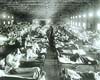 Washington DC (SPX) Aug 31, 2006
Transfusions with blood products taken from people who had recovered from Spanish influenza may have reduced risk for death and improved symptoms of hospitalized patients who contracted Spanish influenza complicated by pneumonia. Early treatment was superior to later treatment. |
|
|

| The content herein, unless otherwise known to be public domain, are Copyright 1995-2006 - SpaceDaily.AFP and UPI Wire Stories are copyright Agence France-Presse and United Press International. ESA PortalReports are copyright European Space Agency. All NASA sourced material is public domain. Additionalcopyrights may apply in whole or part to other bona fide parties. Advertising does not imply endorsement,agreement or approval of any opinions, statements or information provided by SpaceDaily on any Web page published or hosted by SpaceDaily. Privacy Statement |