|
 |
 |
 |
 |
 |
 |
 |
 |

 |
Final Report On Proton Launch Failure Submitted
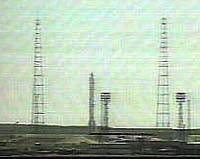
Moscow - Jan 21, 2003 The State Commission investigating the failure of a Proton/Block DM launch vehicle, which left the ASTRA 1K satellite in a lower-than-planned orbit, has submitted its final report to the Russian government, International Launch Services (ILS) announced today. The commission also provided a report to the ILS Failure Review Oversight Board (FROB), which begins its review of the findings this week in Moscow. The State Commission and the FROB were formed shortly after the Nov. 26 launch from the Baikonur Cosmodrome in Kazakhstan. The State Commission exonerated the Khrunichev-built, three-stage Proton launch vehicle early in its investigation. "No fault has been found with the implementation of the mission profile during the powered flight of Proton's Stages 1 through 3," the final report states. The commission identified the Block DM upper stage as the source of the failure. RSC Energia builds the Block DM. The commission noted that the anomaly occurred at the start of the second Block DM main engine burn, as did three other Block DM failures since 1996. In the final report, the commission was unable to pinpoint a single root cause for the failure. There was excessive fuel in the main engine when it was ignited for the second burn, which led to extraordinarily high temperatures that destroyed the engine, the commission found. It identified two possible scenarios for the fuel build-up, both attributed to "stray particles" that clogged the engine components. "The failure ... to perform the second burn was caused by an abnormal development of the start-up process in the course of which ignition took place in the gas duct due to the excessive amount of the fuel ... present at the ignition time during the attempted second burn," the report states. "This in turn was caused by either 1) stray particles clogging the manifolds through which (the fuel) is drained from the starting-fluid feed line after the first burn or 2) loss of air-tightness, due to stray particles, of the valve designed to supply the fuel to the gas generator injector." Energia is developing a corrective action plan to submit to the commission. The commission in turn will review the plan to determine the validity and sufficiency of the proposed remedies. The commission recommended seven areas to review for corrective action, including Block DM testing and inspection, and processing of propellants, all to be addressed by Energia. ILS established the Failure Review Oversight Board to provide an independent assessment of the State Commission findings and to ensure that a robust corrective action plan is in place before commercial flights are resumed. FROB Chairman Eric Laursen, ILS vice president and chief engineer, and other members arrived in Moscow to begin their review this week. The FROB process includes meeting with representatives from the State Commission and from hardware subcontractors. "This incident shows similarities to other Block DM failures, and we will take as much time as necessary to determine that the cause is properly addressed," Laursen said. "We won't use this upper stage until we are certain it is flight-worthy. ILS remains committed to providing reliable, timely launch services for all our customers." Besides Laursen, FROB members include retired NASA and launch industry experts, and representatives of SES-Global, owner of ASTRA 1K, and SES-Americom, the next scheduled ILS customer for Proton. The Russian commission was led by Anatoli Koroteev, general director of the Thermal Processes Institute of the Keldish Center, and includes representatives of all organizations involved in the design, manufacture, operation and support of the Proton/Block DM launch vehicle. Community Email This Article Comment On This Article Related Links International Launch Services SpaceDaily Search SpaceDaily Subscribe To SpaceDaily Express Rocket Science News at Space-Travel.Com
 Successful First Test For Vega's Zefiro 9 Engine
 Paris, France(ESA) Dec 28, 2005
Flames, smoke and a deafening noise accompanied the first firing test of Vega's Zefiro 9 third-stage solid rocket motor. A first examination of the data indicates that everything went well at the test carried out yesterday at Salto de Quirra in southeast Sardinia. |
|
|

| The content herein, unless otherwise known to be public domain, are Copyright 1995-2006 - SpaceDaily.AFP and UPI Wire Stories are copyright Agence France-Presse and United Press International. ESA PortalReports are copyright European Space Agency. All NASA sourced material is public domain. Additionalcopyrights may apply in whole or part to other bona fide parties. Advertising does not imply endorsement,agreement or approval of any opinions, statements or information provided by SpaceDaily on any Web page published or hosted by SpaceDaily. Privacy Statement |