|
 |
 |
 |
 |
 |
 |
 |
 |

 |
Evolutionary Biology Research On Plant Shows Significance Of Maternal Effects
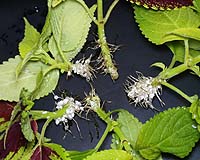
Charlottesville VA (SPX) Nov 19, 2007 When habitat changes, animals migrate. But how do immobile organisms like plants cope when faced with alterations to their environment? This is an increasingly important question in light of new environmental conditions brought on by global climate change. A University of Virginia study, published in the Nov. 16 issue of the journal Science, demonstrates that plants grown in the same setting as their maternal plant performed almost 3.5 times better than those raised in a different environment - indicating that maternal plants give cues to their offspring that help them adapt to their environmental conditions. Evolutionary biologist Laura Galloway, an associate professor of biology at the University of Virginia, recently completed a study of the American bellflower, a native wildflower that commonly grows in both shaded areas and areas that receive full sunlight for at least part of the day. She focused on the transmission of environmental information between maternal plants and their offspring. Galloway planted some seeds in light conditions similar to their maternal plants and some in different light. She found that plants growing in the same setting as their maternal plant outperformed those planted in a different environment. The work was conducted in a natural habitat at the University of Virginia's Mountain Lake Biological Station in Southwest Virginia. Since seeds typically fall close to their maternal plant, they grow in a similar environment. When seeds are dispersed to different environments, Galloway found that the plants may suffer for one generation, but as long as the seeds of those plants grow locally, their offspring will recover. "We found a temporary mechanism of adaptation to local environmental conditions," says Galloway. Since plant adaptation is typically studied on a permanent, genetic level rather than in direct response to environmental conditions, Galloway's insights are unique. Galloway was led to this line of inquiry by chance. She was surprised to observe a number of years ago that plants that had experienced drought had smaller seeds than those that had not. This highly visible physiological change within only one generation intrigued her. "Historically maternal effects have been viewed as a complicating factor - an inconvenience," explains Galloway. "But we have found that they can dramatically influence the performance of an individual." Community Email This Article Comment On This Article Related Links University of Virginia Darwin Today At TerraDaily.com
 Dinosaur From Sahara Ate Like A Mesozoic Cow
 Washington DC (SPX) Nov 16, 2007
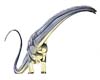
A 110 million-year-old dinosaur that had a mouth that worked like a vacuum cleaner, hundreds of tiny teeth and nearly translucent skull bones will be unveiled Thursday, Nov. 15, at the National Geographic Society. Found in the Sahara by National Geographic Explorer-in-Residence Paul Sereno, paleontologist and professor at the University of Chicago, the dinosaur is a plant eater known as Nigersaurus taqueti. |
|
|

| The content herein, unless otherwise known to be public domain, are Copyright 1995-2007 - SpaceDaily.AFP and UPI Wire Stories are copyright Agence France-Presse and United Press International. ESA Portal Reports are copyright European Space Agency. All NASA sourced material is public domain. Additional copyrights may apply in whole or part to other bona fide parties. Advertising does not imply endorsement,agreement or approval of any opinions, statements or information provided by SpaceDaily on any Web page published or hosted by SpaceDaily. Privacy Statement |