|
 |
 |
 |
 |
 |
 |
 |
 |

 |
Evolution Takes A Hot Bath As Archaea Migrate
Athens GA (SPX) Jun 14, 2006 Since their discovery in the late 1970s, microorganisms known as archaea have fascinated scientists with their ability to thrive where no other life can - in conditions that are extremely hot, acidic or salty. In the 1990s, however, scientists discovered that archaea occur widely in more mundane, low-temperature environments such as oceans and lakes. Now, researchers from the University of Georgia and Harvard University find evidence that these low-temperature archaea might have evolved from a moderate-temperature environment rather than from their high-temperature counterparts - as most scientists had believed. The results appear in the June 2006 issue of the journal Applied and Environmental Microbiology. "Archaea represent one of the three domains of life on Earth," said Chuanlun Zhang, lead author of the study and associate professor of marine sciences at UGA. "Understanding their evolution may shed light on how all life forms evolve and interact with the environment through geological history." Zhang and his colleagues examined a common group of archaea known as Crenarchaeota. He explains that the Crenarchaeota's low-temperature success may involve a unique molecule known as crenarchaeol that allows the organism's cell membrane to remain flexible in cooler environments. The commonly held theory was that the crenarchaeol is a fairly new feature by evolutionary standards - evolving 112 million years ago during the Cretaceous period, the same period in which dinosaurs became extinct. Zhang said the problem with this theory is that it puts the arrival of the organisms that contain crenarchaeol, Crenarchaeota, relatively late in geologic history and doesn't explain how they arose. By analyzing 17 samples from springs in California, Nevada and Thailand as well as examining data published by other researchers in different environments, Zhang and his colleagues found that crenarchaeol was most commonly found at temperatures of about 104 degrees Fahrenheit. This is well above even the warmest sea surface temperatures during the Cretaceous period, leading them to conclude that the crenarchaeol - and by extension the groups of Crenarchaeota that have the molecule - evolved much earlier than previously thought. Zhang's study puts the evolution of Crenarchaeota at 3.5 billion years ago, shortly after life began to emerge on Earth. "Our study helped us to fill a significant gap about the evolution of Crenarchaeota," Zhang said. "The results show that the biomarker is not unique to the low-temperature environment. On the other hand, all known high-temperature (>158 F) Crenarchaeota don't have this biomarker. This suggests that the moderate-temperature Crenarchaeota may be the ancestors to the low-temperature species." Zhang said understanding these ancient organisms is important to the planet's future. Most scientists believe that Crenarchaeota play an important role in fixing carbon dioxide, helping sequester the greenhouse gases from the atmosphere. Having a better understanding of how abundant Crenarchaeota are and how much carbon they remove can help scientists more accurately model the effects of global warming. Community Email This Article Comment On This Article Related Links University of Georgia Darwin Today At TerraDaily.com
 Germany Establishes First Biodiversity Exploratories
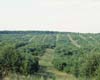 Bonn, Germany (SPX) Jun 13, 2006
In order to promote ecological research in Germany, the DFG has announced the establishment of the first three large-scale research platforms, so-called biodiversity exploratories, in Germany. |
|
|

| The content herein, unless otherwise known to be public domain, are Copyright 1995-2006 - SpaceDaily.AFP and UPI Wire Stories are copyright Agence France-Presse and United Press International. ESA PortalReports are copyright European Space Agency. All NASA sourced material is public domain. Additionalcopyrights may apply in whole or part to other bona fide parties. Advertising does not imply endorsement,agreement or approval of any opinions, statements or information provided by SpaceDaily on any Web page published or hosted by SpaceDaily. Privacy Statement |