|
 |
 |
 |
 |
 |
 |
 |
 |

 |
European Galileo Satellite Program In Early Budget Over Run
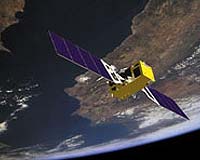
Brussels (AFP) May 22, 2006 Europe's Galileo satellite navigation system has already run more than 400 million euros (513 million dollars) over budget in its first phase, the head of the group managing the project said on Monday. The over run was due mainly to miscalculations for the costs of building and launching two test satellites, said Rainer Grohe, director of the Galileo Joint Undertaking. The first satellite was sent into orbit in December while the second is due to head into space by the end of the year. Grohe said improvements to the project's security system also added to the financial burden. The spending brings to 1.5 billion euros the total cost of the first phase. Around 4.5 billion euros have been budgeted for the entire project, which will involve putting 30 satellites into orbit. Europe hopes the Galileo project, scheduled to be up and running commercially by 2010, will rival the reigning GPS network from the United States. Unlike GPS, which is controlled by the US military, Galileo will stay under civilian control, increasing the European Union's strategic independence. The new system is expected to be more accurate than GPS, giving mariners, pilots, drivers and others an almost pinpoint-accurate navigational tool.
Source: Agence France-Presse Community Email This Article Comment On This Article Related Links Galileo Joint Undertaking GPS Applications, Technology and Suppliers
 ESA Satellite Workshop Forecasts Navigation Advances
 Darmstadt, Germany (SPX) May 17, 2006
Based on new research in navigation and measurement, scientists think Earth-watching satellites could monitor sea-level and atmospheric changes with enough precision they someday could help predict tsunamis and earthquakes. |
|
|

| The content herein, unless otherwise known to be public domain, are Copyright 1995-2006 - SpaceDaily.AFP and UPI Wire Stories are copyright Agence France-Presse and United Press International. ESA PortalReports are copyright European Space Agency. All NASA sourced material is public domain. Additionalcopyrights may apply in whole or part to other bona fide parties. Advertising does not imply endorsement,agreement or approval of any opinions, statements or information provided by SpaceDaily on any Web page published or hosted by SpaceDaily. Privacy Statement |