|
 |
 |
 |
 |
 |
 |
 |
 |

 |
Europe To Fund Global Monitoring for Environment And Security Program
Paris (ESA) Aug 23, 2002 At a recent meeting for the Global Monitoring for Environment and Security (GMES) programme, the European Space Agency (ESA) detailed its five-year, Euro 83 million plan to establish environmental information services from space. The GMES programme was established by ESA and the European Commission (EC) to exploit more effectively the potential of satellite and other environmental monitoring systems to meet end-user requirements. For ESA, it is the heart of a new programme element, called GMES Services, which will support GMES priorities in monitoring environmental stress, analysing the consequences of climate changes and managing vital natural resources, along with assisting in regional development and humanitarian aid. As the first step, ESA is releasing bid invitations in early September for GMES Services, with European end users actively involved in formulating contract proposals. User stakeholders that already have expressed interest in participating in the GMES Services element include Europe-wide and national environmental agencies, weather and climate forecasters, coastal monitoring and other civil protection, humanitarian aid and related non-governmental organisations, and international bodies responsible for environmental treaties. The bid invitations are expected to result in approximately 10 contracts valued at Euro 15 million in total. A briefing is scheduled for 12 September 2002 at ESA's ESRIN facility in Frascati, Italy, to bring together potential bidders for a question-and-answer session on the bid process. Contract proposals are due by mid-November, with the first contracts awarded by the end of the year. ESA and the EC will use the contracts to help prepare a joint report, due by December 2003, on the future of GMES for the ESA Council and the EC Research Council. "We are taking a bold step forward in our first call for GMES-related tenders by specifically asking the user community to take a leading role in the bid process, and inviting them to partner with Europe's foremost service providers, research organisations and systems developers," commented Jos� Achache, director of ESA's Earth Observation Programmes. "We need user-led teams to work together to consolidate Europe's existing environmental monitoring capabilities and kick-start GMES into action." GMES is envisioned as a complete decision-support system for use by the public and public policymakers, with the capability of acquiring, processing, interpreting and distributing all useful information related to the environment, risk management and natural resources. This information is critical for the formulation and effective implementation of EU policies, and is a vital part of Europe's contribution to issues affecting the global environment and the safety of the Earth. At the global level, GMES will provide new verification tools to contribute to the precise monitoring of compliance with international agreements, such as the Kyoto protocol on climate change, as well as security and international aid agreements. At the EU regional level, GMES will provide objective data to support a broad range of public policies, including regional development, transportation, agriculture and foreign policy. At the same time, GMES will help local authorities pinpoint problems (e.g. shoreline erosion, environmental stress) and minimize the risks and consequences of environmental changes on local populations. GMES is also a cornerstone of the European space strategy developed by EC and ESA. Along with the Galileo global satellite navigation system, GMES is key to the realisation of a unified space policy emerging from the ever-closer partnership between the two organisations. "GMES is both a technological and an organisational challenge for Europe," EU Research Commissioner Philippe Busquin told the 250 participants at the GMES Forum in Brussels, held 15-17 July 2002. "It is a good example of how Europe, by working together in research, can develop technologies that contribute to improving the quality of life and meeting security needs. Community Email This Article Comment On This Article Related Links GMES SpaceDaily Search SpaceDaily Subscribe To SpaceDaily Express Earth Observation News - Suppiliers, Technology and Application
 New Legislation Initiated To Support Commercial Remote Sensing Industry
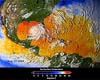 New York NY (SPX) Jan 11, 2006
The importance of remotely sensed data and technologies to support natural disasters has prompted attention and action in Washington. New initiatives and legislation authorizing appropriations to the remote sensing industry will be discussed at Strategic Research Institute's U.S. Commercial Remote Sensing Industry conference, scheduled for February 9-10, 2006 in Washington D.C. |
|
|

| The content herein, unless otherwise known to be public domain, are Copyright 1995-2006 - SpaceDaily.AFP and UPI Wire Stories are copyright Agence France-Presse and United Press International. ESA PortalReports are copyright European Space Agency. All NASA sourced material is public domain. Additionalcopyrights may apply in whole or part to other bona fide parties. Advertising does not imply endorsement,agreement or approval of any opinions, statements or information provided by SpaceDaily on any Web page published or hosted by SpaceDaily. Privacy Statement |