|
 |
 |
 |
 |
 |
 |
 |
 |

 |
Environmental Exodus
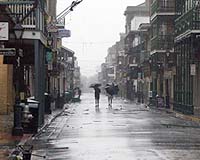
Bloomington IN (SPX) Nov 27, 2007 Climate change is the largest environmental change expected this century. It is likely to intensify droughts, storms and floods, which will undoubtedly lead to environmental migrations and potential conflicts in the areas migrated to. In the aftermath of environmental disasters such as Hurricane Katrina in the US, Rafael Reuveny from Indiana University in the US looks at the role of environmental degradation on population migration, or 'ecomigration'. He examines its impact on areas receiving migrants and resulting violent conflict in particular. His study has just been published online in Springer's journal Human Ecology. People facing environmental disasters have no choice but to leave the affected area. The larger the migration and the shorter the period over which it occurs, the harder it is to absorb the migrants, raising the likelihood of conflict. For instance, migrants clash over jobs, resources and way of life, and violent interactions such as theft, beating, armed scuffles, seizure of resources and property, murders and insurgencies are likely. In order to minimize the impact of environmental migrations, which can cause violent conflict in areas receiving migrants, Reuveny says developed countries would be wise to invest in preventive strategies both at home and in developing countries - since climate change is expected to degrade the environment considerably this century. Reuveny's analysis of three case studies - the US Dust Bowl in the 1930s; Bangladesh since the 1950s; and Hurricane Katrina in 2005 - shows that although climate change can spur large population movements, public policy can alleviate the pressures of ecomigration. Indeed, if a country can invest in areas affected by environmental problems, the scope of ecomigration can be reduced and transitions can be smoother as more people are likely to return to the area. In Reuveny's view, "minimizing climate change-induced migration and violent conflict in receiving areas requires an engineered economic slowdown in the developed countries, and population stabilization and economic growth in developing countries financed by the developed countries." These policies form the basis of the five-step approach he advocates to policy makers. Community Email This Article Comment On This Article Related Links Indiana University All About Human Beings and How We Got To Be Here
 Environmental Researchers Propose Radical Human-Centric Map Of The World
 Montreal, Canada (SPX) Nov 27, 2007
Ecologists pay too much attention to increasingly rare "pristine" ecosystems while ignoring the overwhelming influence of humans on the environment, say researchers from McGill University and the University of Maryland, Baltimore County (UMBC). Prof. Erle Ellis of UMBC and Prof. Navin Ramankutty of McGill assert that the current system of classifying ecosystems into biomes (or "ecological communities") like tropical rainforests, grasslands and deserts may be misleading. |
|
|

| The content herein, unless otherwise known to be public domain, are Copyright 1995-2007 - SpaceDaily.AFP and UPI Wire Stories are copyright Agence France-Presse and United Press International. ESA Portal Reports are copyright European Space Agency. All NASA sourced material is public domain. Additional copyrights may apply in whole or part to other bona fide parties. Advertising does not imply endorsement,agreement or approval of any opinions, statements or information provided by SpaceDaily on any Web page published or hosted by SpaceDaily. Privacy Statement |