|
 |
 |
 |
 |
 |
 |
 |
 |

 |
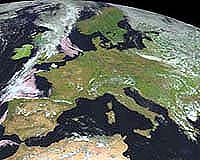
Environmental Cloud On Horizon For Mediterranean, Warns UN
Paris (AFP) Nov 03, 2005 Mediterranean countries from Tunisia to Turkey face a bleak environmental future with concrete coastlines, rising temperatures, mountains of refuse and endless oil slicks, according to a UN prognosis for the region in 2025. Only a radical change in public policy and increased cooperation between northern and southern states will prevent the dismal forecast from coming true, according to the UN Environment Programme's "Plan Bleu" Mediterranean centre. Some 300 experts from both the northern and southern shores of the sea linking Europe, Africa and the Middle East worked on the 430-page environment and development report, published Thursday in Paris. The growth of built-up areas in northern countries and illegal urbanisation in the south, increased car use and soaring energy consumption will all exacerbate environmental problems, while carbon dioxide emissions are set to leap by 45 percent to 2.8 billion tonnes from 2000 to 2025, the study warns. Climate change, largely caused by carbon dioxide, is likely to be "twice as fast" in the Mediterranean basin than in northern Europe, threatening more droughts, forest fires and parasitic infections. Under current policies, an additional 4,000 kilometres (2,500 miles) of coastline will be paved over in the next 20 years, while coastal zones will see their populations rise from 143 million in 2000 to 174 million in 2025. With a spiralling population, the region as a whole will be home to 523 million inhabitants by 2025, compared with 428 million in 2000, a rise of 22 percent, the report stresses. More than 1.5 million hectares (3.75 million acres) of good agricultural land will be sacrificed to urbanisation and infrastructure as a result. Limited water supplies may dry up completely in some countries, with the associated risk of disease and exacerbated geopolitical conflicts, for example in the Middle East. The study also warns of a growing divide between the north (the 12 countries from Spain to Greece) and the south (from Morocco to Turkey). In southern Mediterranean countries, some 63 million people will lack the minimum requirement of 500 cubic metres (17,500 cubic feet) of water per inhabitant per year, while urban and industrial waste will degrade water quality. Meanwhile energy consumption could double over the next 30 years, with northern countries importing record amounts and the south seeing a reduction in production capacity, particularly of Algerian gas and Libyan oil. Road traffic will grow 2.7 percent in northern countries and 3.4 percent in the south, while maritime freight could almost quadruple, risking a rise in oil spills and fuel dumping. To avoid disaster, authorities need to change consumption rates, encourage renewable energy and crack down on waste, the report urges. If water leaks are tackled, predicted consumption in 2025 could be reduced by a quarter, it says. Community Email This Article Comment On This Article Related Links SpaceDaily Search SpaceDaily Subscribe To SpaceDaily Express Climate Science News - Modeling, Mitigation Adaptation
 The Forgotten Methane Source
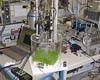 Heidelberg, Germany (SPX) Jan 11, 2006
In the last few years, more and more research has focused on the biosphere; particularly, on how gases which influence the climate are exchanged between the biosphere and atmosphere. Researchers from the Max Planck Institute for Nuclear Physics have now carefully analysed which organic gases are emitted from plants. |
|
|

| The content herein, unless otherwise known to be public domain, are Copyright 1995-2006 - SpaceDaily.AFP and UPI Wire Stories are copyright Agence France-Presse and United Press International. ESA PortalReports are copyright European Space Agency. All NASA sourced material is public domain. Additionalcopyrights may apply in whole or part to other bona fide parties. Advertising does not imply endorsement,agreement or approval of any opinions, statements or information provided by SpaceDaily on any Web page published or hosted by SpaceDaily. Privacy Statement |