|
 |
 |
 |
 |
 |
 |
 |
 |

 |
English to be the world's 'language of choice': British PM
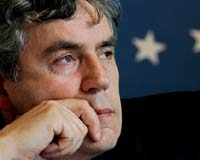
London (AFP) Jan 17, 2008 British premier Gordon Brown Thursday pledged to make English the world's "language of choice", announcing a huge programme to boost teaching and access to resources, particularly in China and India. Brown, who heads to China later Thursday on his maiden visit as leader, said the British Council cultural organisation will offer English students and teachers greater access to materials, resources and qualifications via the web. Teachers and learners will be able to communicate with their counterparts around the world, while students will get one-to-one tuition via voice over Internet protocol (VOIP). Writing on the Downing Street website, he said the aim was to encourage one million "hits" per month, with a particular focus on China, where the government there has said children should be taught English from the age of six. Currently, about two billion people are learning or teaching English worldwide, while some 350 million speak English in India and 300 million in China, the prime minister said. But he added: "I believe that, with the right help, we will have a situation by 2025 where the number of English speakers in China exceeds the number of speakers of English as a first language in all of the rest of the world." Brown also said the existing framework of qualifications for English teachers abroad will be expanded, short-distance learning courses developed and co-operation enhanced with broadcasting organisations like the BBC. In India, which he visits Sunday and Monday, Brown said he will announce a British Council-run programme to recruit "master trainers" to train 750,000 English teachers in India over the next five years. Private sector companies in the telecoms, Internet and broadcast sectors will also be encouraged to enhance access to English learning, teaching and practice materials, he added. Brown said that English had developed into more than a language, becoming a "bridge across borders and cultures, a source of unity in a rapidly changing world". "English is our heritage but it is also becoming the common future of human commerce and communication," he said. "This is a great opportunity for Britain -- and a measure of the greatness that lies not in empire or territory but through a language that has the power to bring this world of over 200 countries and billions of people closer together, with the versatility to evolve and adapt. "We will take up with vigour the bold task of making our language the world's common language of choice, the language that helps the world talk, laugh and communicate together." Community Email This Article Comment On This Article Related Links All About Human Beings and How We Got To Be Here
 Auditory Neurons In Humans Far More Sensitive To Fine Sound Frequencies Than Most Mammals
 Los Angeles CA (SPX) Jan 16, 2008
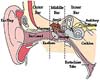
The human ear is exquisitely tuned to discern different sound frequencies, whether such tones are high or low, near or far. But the ability of our ears pales in comparison to the remarkable knack of single neurons in the brain to distinguish between the very subtlest of sound frequencies. |
|
|

| The content herein, unless otherwise known to be public domain, are Copyright 1995-2007 - SpaceDaily.AFP and UPI Wire Stories are copyright Agence France-Presse and United Press International. ESA Portal Reports are copyright European Space Agency. All NASA sourced material is public domain. Additional copyrights may apply in whole or part to other bona fide parties. Advertising does not imply endorsement,agreement or approval of any opinions, statements or information provided by SpaceDaily on any Web page published or hosted by SpaceDaily. Privacy Statement |