
 |
 |
 |
 |
 |
 |
 |
 |
 |

 |
Engage Dark Matter!
Washington - September 16, 1999 -  Washington - September 16, 1999 - "I'm trying as hard as I can , Captain," exclaims Scotty, the strain etching lines in his forehead. "I can't give you any more!" But unlike Star Trek's Enterprise, future spacecraft might use a less savoury energy supply than Scotty's beloved dilithium crystals: human waste.
NASA is enlisting the aid of Advanced Fuel Research of Connecticut in a new $600 000 project to turn astronaut waste into a power source for spaceships. The process might also yield other useful chemicals that are in short supply aboard an interplanetary spacecraft or on an extraterrestrial base. The secret is pyrolysis: breaking down the waste by heating it in the absence of oxygen. Normally when you burn organic molecules such as those found in faeces or in plastic, they combine with oxygen in the air, producing carbon dioxide and water. But in pyrolysis, there is no oxygen to combine with, so the molecules break their bonds and rearrange themselves into smaller molecules. "Things start breaking down at about 350 �C, and what you start making includes a lot of liquids," says AFR scientist Mike Serio. "At 600 �C or 650 �C, you break down the liquids into gases. It does give you flexibility." You could burn these liquids or gases to release energy, or turn them into plastics or other organic materials, says Jim Markham, the company's chief executive officer. "[Pyrolysis] can produce heavier molecules such as benzene or toluene, and can be a source of raw materials to make plastics or rubber," says John Fisher, a chemical engineer at NASA's Ames Research Center in California. And pyrolysis would also create ammonia for fertiliser. Since the pyrolytic process works on many different organic compounds, it will consume many types of fuel. "You can use human waste as well as other waste, like scrap plastic bags," says Markham. Further,ore, you don't have to worry about variations in the consistency and content of the waste material, the pyrolysis unit should be able to handle them all. "It's tailored to unpredictable mixtures," he says. "Ideally, you'd dial in the desired outcome and it would compensate." Though a Mars base is still a pipe dream, there might be a use for the process back on Earth--just dump your plastic or other organic waste in a home pyrolysis unit and reap the energy. But in the meantime, Scotty will have to continue milking his dilithium crystals. This latest idea follows in the wake of a Russian project, announced last year, which aims to use equally bizarre methods of recycling waste in order to maximise available power. The Russian plan, intended to be ready for their first crewed interplanetary mission, is to employ bacteria to break down the astronauts' used underwear to make additional methane, which could then be used to power the spacecraft (New Scientist, 12 December 1998, p 5). This article will appear in the September 18 issue of New Scientist New Scientist. Copyright 1999 - All rights reserved. The material on this page is provided by New Scientist and may not be published, broadcast, rewritten or redistributed without written authorization from New Scientist.
Email This Article Comment On This Article Related Links Space
 Satellite Launch To Boost DTH In India
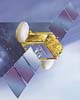 Calcutta, India (SPX) Dec 28, 2005
The successful launch Thursday of India's heaviest satellite from spaceport of Kourou in French Guyana may have boosted the country's space research efforts to yet another level, but it has also lifted the spirits of at least three Direct-To-Home televisions broadcasters, one of which has been waiting for years to launch its services in India. |
|
|

|
|
|
|
|
|
|
|
|
|
|
|
| The content herein, unless otherwise known to be public domain, are Copyright 1995-2006 - SpaceDaily.AFP and UPI Wire Stories are copyright Agence France-Presse and United Press International. ESA PortalReports are copyright European Space Agency. All NASA sourced material is public domain. Additionalcopyrights may apply in whole or part to other bona fide parties. Advertising does not imply endorsement,agreement or approval of any opinions, statements or information provided by SpaceDaily on any Web page published or hosted by SpaceDaily. Privacy Statement |

