|
 |
 |
 |
 |
 |
 |
 |
 |

 |
Emergency Procedures Well Prepared, But Not Used in Shenzhou-5
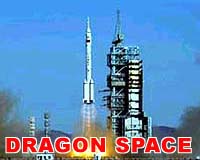
Hong Kong - Nov 05, 2003 During the 21-hour flight of Shenzhou-5, no emergency procedure and safety equipment was used although they were well prepared in design, said Qi Faren, chief designer of the spacecraft system, here Monday. Qi, who is visiting Hong Kong with China's first astronaut YangLiwei and other space experts, told Xinhua in an exclusive interview that among the software programs of the spacecraft and carrier rocket, 80 percent were designed for emergency, much more than the 20 percent for normal operation. The safety of astronaut has been given top priority in China's space program, said Qi, who is also a member of the International Academy of Astronautics. Qi said that when Yang Liwei met him after returning to the Earth, Yang said the spacecraft is really well designed. It's the highest praise to the spacecraft designers by the astronaut, he added. The Chinese astronaut can make emergency escapes when a danger occurs from the very beginning of the liftoff. The escape tower atop the carrier rocket is used to make an emergency getaway, according to Qi. Once troubles occur, the rocket's malfunction-detecting system will give an escape order to the escape tower, whose engines ignite immediately to pull the orbital and re-entry modules off from the rocket and land with a parachute. At 200 seconds from the liftoff and at an altitude of 100 kilometers, the craft's flaring will also be given up. If problems happen thereabouts, the spacecraft's own engines will ignite to disengage the craft from the rocket, and send it into the orbit. The first astronaut stayed in space in less than 24 hours, orbiting the earth 14 times, and returned. During each Earth-orbiting, the astronaut can conduct emergency returns any time back to atmosphere, if there could have occurred any risks of mechanical problems, meteorites and body discomforts. In order to ensure astronaut's safety during landing, the astronaut is equipped with lifeboat, compass, matches, fishhook, gun and knife in case that he lands in an hostile environment, said Qi. In addition, helicopters, salvage ships and other rescue measures were also well prepared, he added. source: Xinhua Community Email This Article Comment On This Article Related Links SpaceDaily Search SpaceDaily Subscribe To SpaceDaily Express The Chinese Space Program - News, Policy and Technology China News from SinoDaily.com
 Taikonauts On Moon A Far Off Dream For China Yet
 Beijing (XNA) Jan 05, 2006
A one-year lunar fly-by mission may start in April 2007 in China, but a manned flight to the Earth's neighbour may be a long way away, a chief lunar exploration scientist said last night. |
|
|

| The content herein, unless otherwise known to be public domain, are Copyright 1995-2006 - SpaceDaily.AFP and UPI Wire Stories are copyright Agence France-Presse and United Press International. ESA PortalReports are copyright European Space Agency. All NASA sourced material is public domain. Additionalcopyrights may apply in whole or part to other bona fide parties. Advertising does not imply endorsement,agreement or approval of any opinions, statements or information provided by SpaceDaily on any Web page published or hosted by SpaceDaily. Privacy Statement |