|
 |
 |
 |
 |
 |
 |
 |
 |

 |
Eating Right For Long-Duration Space Missions
Houston - August 8, 2001 During long-duration space flights, astronauts often don't eat as much as they should, which can cause weight loss and other nutritional concerns, such as low levels of vitamin D. In a recent study astronauts who lived aboard the Russian space station Mir, and counterparts living in seclusion on Earth, has validated a tool for measuring astronauts' dietary intake during long space flights. "We have developed a program that helps us ensure that crewmembers go to space with an optimal nutritional status, and that we do everything we can to help them remain healthy while they are there," said Dr. Scott M. Smith, lead author on the paper and a nutritionist in the Life Sciences Research Laboratories at the NASA Johnson Space Center (JSC) in Houston, Texas. "When you are going to spend a few months in space, it's important to be sure you meet your body's nutritional needs," Smith said. One nutrient of particular concern during long-duration space flights is vitamin D, which is important for bone health. The lack of ultraviolet light due to spacecraft shielding takes away the body's ability to produce this vitamin naturally during space flight. "This is just one example of why food becomes even more important during long space flights," Smith added. The study, published in the Journal of Nutrition, focused on two NASA astronauts who each spent more than four months aboard Mir. They were compared to two groups of men and women who lived in a semi-closed chamber at JSC for 60 and 91 days, respectively. Blood and urine were collected from the astronauts both before and after their flights, and from the chamber groups before, during and after their chamber stays. These samples were used to measure the amounts of nutrients present, including proteins, vitamins and minerals. A specially designed questionnaire to monitor food consumption also was completed on a regular basis by all the participants. Finally, each participant's body mass was measured at various times throughout the study to look for weight loss or gain. "These studies provided scientific data validating the space flight Food Frequency Questionnaire," Smith said. "That questionnaire is now part of a comprehensive nutrition program designed to help ensure the health of long-duration astronauts." Smith and his team of researchers are continuing this study with crews aboard the International Space Station. Like the Mir astronauts and chamber participants, the station crews receive a comprehensive assessment of their nutritional status before and after flight, and complete the computerized Food Frequency Questionnaire while in space. "This unique software program allows crewmembers to relay food intake information to the ground," Smith said. "It takes only five to ten minutes per week to complete, and it provides us with very important real-time information. When necessary, recommendations can be made for the crew to adjust their dietary intake while on orbit." "These studies will help ensure the health and safety of the astronauts working aboard the International Space Station," Smith added. "They also will provide a better understanding of how the body's nutritional needs change during prolonged weightlessness, and will further our knowledge about nutrition on Earth." Community Email This Article Comment On This Article Related Links S/MORE - Shuttle-MIR Online Research Experience SpaceDaily Search SpaceDaily Subscribe To SpaceDaily Express Space Tourism, Space Transport and Space Exploration News
 NASA Refines Design For Crew Exploration Vehicle
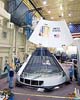 Washington DC (SPX) Jan 12, 2006
NASA's Constellation Program is making progress toward selecting a prime contractor to design, develop and build the Crew Exploration Vehicle (CEV), America's first new human spacecraft in 30 years. |
|
|

|
|
|
|
|
|
|
|
|
|
|
|
| The content herein, unless otherwise known to be public domain, are Copyright 1995-2006 - SpaceDaily.AFP and UPI Wire Stories are copyright Agence France-Presse and United Press International. ESA PortalReports are copyright European Space Agency. All NASA sourced material is public domain. Additionalcopyrights may apply in whole or part to other bona fide parties. Advertising does not imply endorsement,agreement or approval of any opinions, statements or information provided by SpaceDaily on any Web page published or hosted by SpaceDaily. Privacy Statement |