
 |
 |
 |
 |
 |
 |
 |
 |
 |

 |
Eaten By A G-type Star
Baltimore - August 12, 1999 - The phrase "big fish eat little fish" may hold true when it comes to planets and stars. Perhaps as many as 100 million of the sun-like stars in our galaxy harbor close-orbiting gas giant planets like Jupiter, or stillborn stars known as brown dwarfs, which are doomed to be gobbled up by their parent stars. Space Telescope Science Institute astronomer Mario Livio and postdoctoral fellow Lionel Siess did not directly observe the planets, because they had already been swallowed by their parent stars. But Livio did find significant telltale evidence that some giant stars once possessed giant planets that were then swallowed up. The devouring stars release excessive amounts of infrared light, spin rapidly, and are polluted with the element lithium. About 4 to 8 percent of the stars in our galaxy display these characteristics, according to Livio and Siess. This is consistent with estimates of close orbiting giant planets, based on discoveries of extrasolar planets by radial velocity observations, which measure the amount of wobble in a star due to the gravitational tug of an unseen companion. An aging solar-type star will expand to a red giant and in the process engulf any close-orbiting planets. If the planets are the mass of Jupiter, or greater, they will have a profound effect on the red giant's evolution. First, according to Livio's calculations, such a star is bigger and brighter because it absorbs gravitational energy from the orbiting companion. This heats the star so that it puffs off expanding shells of dust, which radiate excessive amounts of infrared light. The orbiting planet also transfers angular momentum to the star, causing it to "spin up" to a much faster rate than it would normally have. Giant planets carry the lion's share of angular momentum in a stellar system. For example, Jupiter and Saturn contain 98 percent of the angular momentum in the solar system. Finally, a chemical tracer is the element lithium, which is normally destroyed inside stars. A newly devoured Jovian planet would provide a fresh supply of lithium to the star, and this shows up as an anomalous excess in the star's spectrum. In our solar system Jupiter is too far from the Sun to be swallowed up when the Sun expands to a red giant in about 5 billion years. However, detections of extrasolar planets do show that Jupiter-sized planets can orbit unexpectedly close to their parent stars. Some are even closer than Earth is to our Sun. These worlds are doomed to be eventually swallowed and incinerated. The Space Telescope Science Institute is operated by the Association of Universities for Research in Astronomy, Inc. for NASA, under contract with NASA's Goddard Space Flight Center, Greenbelt, MD. The Hubble Space Telescope is a project of international cooperation between NASA and the European Space Agency.
Related News Baskets at SpaceDaily
ExtraSolar Articles at SpaceDaily
The Search For Life at SpaceDaily
Recommended Offsite Links
Email This Article Comment On This Article Related Links Space
 Satellite Launch To Boost DTH In India
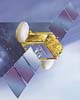 Calcutta, India (SPX) Dec 28, 2005
The successful launch Thursday of India's heaviest satellite from spaceport of Kourou in French Guyana may have boosted the country's space research efforts to yet another level, but it has also lifted the spirits of at least three Direct-To-Home televisions broadcasters, one of which has been waiting for years to launch its services in India. |
|
|

|
|
|
|
|
|
|
|
|
|
|
|
| The content herein, unless otherwise known to be public domain, are Copyright 1995-2006 - SpaceDaily.AFP and UPI Wire Stories are copyright Agence France-Presse and United Press International. ESA PortalReports are copyright European Space Agency. All NASA sourced material is public domain. Additionalcopyrights may apply in whole or part to other bona fide parties. Advertising does not imply endorsement,agreement or approval of any opinions, statements or information provided by SpaceDaily on any Web page published or hosted by SpaceDaily. Privacy Statement |

