|
 |
 |
 |
 |
 |
 |
 |
 |

 |
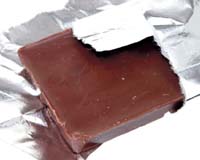
Eat Cocoa And Live Longer
UPI Food Writer Rye, England (UPI) March 13, 2007 When they are not talking about the sonic rise in house prices, the English mutter about the collapse of the National Health Service. Newspapers trumpet the latest victim of the flesh-eating MRSA superbug (methicillin-resistant Staphylococcus aureus), which hides in hospitals waiting to attack surgery-weakened and recovering patients. Antibiotics, no longer trusted to deal with resistance to them, are falling from favor. So what are the Brits depending on to deal with bacteria...? Maggots! The headline from The Thunderer, as the London Times is fondly known, read like something from a supermarket checkout tabloid: "How maggots could save the National Health Service ($324 million) a year." Apparently, they can clean wounds and clear bacteria faster and more effectively than much more expensive antibiotics. This wouldn't come as news to Florence Nightingale. Some people might wonder which is more ghastly to contend with -- having a limb amputated or crawling with slithering, living, white rice look-alikes. And leeching has been enjoying something of a revival, hovering around the edges of modern medicine ready for a comeback for reducing fevers. But so far it's all talk. Not all ancient remedies, however, are ones to make us squirm. The Kuna Indians of Panama have excited the attention of Harvard Medical School for an ancient cure surely none of us will turn up our noses at: cocoa. Professor of Medicine Norman Hollenberg reports in the current International Journal of Medical Sciences of cocoa therapy -- one we would happily be prescribed, and one we already practice -- just not in the right quantities or with the right quality of compound. For centuries, the isolated tribal people living on the San Blas Islands north of Panama have apparently benefited from a diet that includes up to 40 cups a week of the soothing dark drink. If we indulged in drinking that much of the cocoa found in supermarkets, we would quickly succumb to extra weight gain, pimples and zits and the possibility of heart attacks. What we think of as cocoa in the modern world is generally a processed powder pumped with sugar and stripped of goodness. But the Kuna Indians are drinking the unadulterated, unstripped cocoa, its bitterness tempered by sugar. The secret compound is epicatechin. This is what Hollenberg believes is the element responsible for the exceptionally low incidences of heart disease, stroke, cancer or diabetes among the Kunas. Epicatechin is a flavonoid that has been recently celebrated for its antioxidant properties. Food developers have latched onto it to launch a whole new line in drinks, promoting the way that flavonoids that are found in green tea and red wine can improve blood flow. Well, you can bet that's about to change. Expect to find chocolate drinks jostling their way onto the shelves as the new health beverages. The epicatechin flavonoid is apparently found at much more concentrated levels in cocoa than in those drinks and other foods that boast of antioxidants. Professor Hollenberg thinks epicatechin is so important it should be reclassified as a vitamin. You can't just reach for the sugary brown stuff you've got stored in the back of your pantry, however. You have to invest in pure cocoa powder. The trouble is, flavonoids are bitter. It's OK when you're drinking red wine and green tea, but not great in cocoa. So food-industry producers strip it off the cocoa bean, removing the protective property from mass-produced cocoa. Professor Hollenberg has been studying the Kuna for 16 years. And he's found when they move from the San Blas Islands north of Panama, settle in the cities and drink the same cocoa drinks we drink, their levels of good health are no longer sustained. He said that when he measured their cocoa consumption, he found the Kuna people had "probably the most flavonoid-rich diet of any population." A senior researcher at Britain's Institute of Food Research, Dr. Paul Kroon, backs him up. "The science does look robust," he told the Sunday Times. "It is indicative that epicatechin is the active compound." It'll be a race to see which industrial drinks company gets into production first. Few of us will say no to cocoa as a health drink. Until we can reach for a canned or bottled cocoa-for-health drink, here is a recipe for individual servings of the best cocoa in the universe. Don't even think of having 40 of these a week unless you want to become extinct. One on your birthday or at Easter will do nicely. But it makes a terrific dessert when you have unexpected guests. -- Break 1� ounces of the best dark chocolate, at least 70 percent cocoa solids, into small pieces and put into a blender. -- Fill a mug with boiling water and set aside. -- Bring a cup of whole milk to the boil. Add half a teaspoon of vanilla extract, then pour the milk into the blender. -- Whiz it up until the chocolate has melted completely, pour the boiling water out of the mug and fill the mug with the frothy dark chocolate soup.
Source: United Press International Community Email This Article Comment On This Article Related Links All About Human Beings and How We Got To Be Here All About Human Beings and How We Got To Be Here
 Getting On Your Nerves And Repairing Them
 Bethesda MD (SPX) Mar 12, 2007
Here is some news that will certainly get on people's nerves: In a study to be published in the March 2007 issue of The FASEB Journal, scientists from East Carolina University report that a key molecular mechanism, RNA interference (RNAi), plays a role in the regeneration and repair of periphery nerves, which are the nerves located outside of the brain and spinal column. |
|
|

| The content herein, unless otherwise known to be public domain, are Copyright 1995-2006 - SpaceDaily.AFP and UPI Wire Stories are copyright Agence France-Presse and United Press International. ESA PortalReports are copyright European Space Agency. All NASA sourced material is public domain. Additionalcopyrights may apply in whole or part to other bona fide parties. Advertising does not imply endorsement,agreement or approval of any opinions, statements or information provided by SpaceDaily on any Web page published or hosted by SpaceDaily. Privacy Statement |