|
 |
 |
 |
 |
 |
 |
 |
 |

 |
Eastern NC Ecosystem Bounces Back From Hurricanes
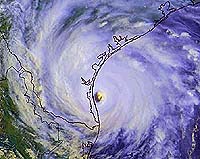
Raleigh NC (SPX) Jun 16, 2004 After receiving the brunt of powerful hurricanes in 1996 and 1999, the Neuse River and Estuary and western Pamlico Sound in eastern North Carolina appear to have suffered few long-term ill effects from the storms, and have actually benefited ecologically in some ways from the storms' scouring effects. Those are the findings of a team of North Carolina State University scientists and collaborators from various North Carolina universities and government agencies. Dr. JoAnn Burkholder, NC State professor of botany and director of the Center for Applied Aquatic Ecology, says the research shows that water quality, numbers and health of most of the area's shellfish and finfish, and the overall health of the surveyed water systems � though initially acutely affected by storms, especially Hurricane Fran in 1996 � have over the long run returned to normal, suggesting the resilience of estuarine systems such as the Neuse and Pamlico Sound. Some harmful organisms that took hold before the storms are now in abeyance, suggesting the storms beneficially flushed the areas studied. The one major estuary dweller that has been slow to recover is the blue crab, the researchers say, although its numbers are now creeping back toward average abundances. The research is published online this week (June 14) in Proceedings of the National Academy of Sciences (U.S.A.). After the storms, predictions abounded that Pamlico Sound, of the Albemarle-Pamlico Estuarine System � the largest lagoonal estuary in the United States � would be devastated by the cumulative effects of Hurricane Fran in 1996 and Hurricanes Dennis, Floyd and Irene in 1999. But the longer-term data presented in this study show the remarkable recovery and resilience of the water quality and the finfish and shellfish inhabitants. The paper shows that although less water volume was delivered by Hurricane Fran, large amounts of fish kills were reported due to oxygen depletion and high concentrations of contaminants like nitrogen, phosphorus and fecal bacteria. After the 1999 hurricane season, however, contaminant loads were about the same as in 1996, but no major fish kills were reported due to the enormous amount of flooding that diluted the pollution, Burkholder says. Diminished levels of dissolved oxygen were documented after both storms. But those levels returned to normal shortly after the storms, the research shows. Burkholder added that the storms displaced undesirable organisms � like the toxic alga Pfiesteria, linked to massive fish kills in the 1990s � to areas of the estuary that are less conducive for growth. Pfiesteria populations have shown minimal recovery. The paper also states that commercial catch numbers of shrimp or bivalve molluscs such as clams and scallops did not suffer long-term effects from the storms. The one species affected negatively for a longer period of time by the storms was the blue crab, the paper asserts. Reductions in the number of blue crabs can be attributed, says Dr. David Eggleston, professor of marine science at NC State and co-author of the paper, to the relationship between hurricane floodwaters, the crabs' migration response to the floodwaters and the subsequent overfishing of the mass-migrating crabs. "We feel the historically low abundances of blue crabs in 2000 and 2001 are a direct result of the interactions between floodwaters and overfishing," Eggleston said. "The blue crabs migrated en masse, which concentrated them and made them more vulnerable to fishing." Another piece of the puzzle involved the areas where the blue crabs colonize, Eggleston says. Floodwaters from the rivers impeded the movement of post-larval stages of the blue crab from seawater inlets to their nursery habitats along the western shore of Pamlico Sound. Eggleston says, though, that his new stock assessments of the blue crabs will shed further light on its status in Pamlico Sound. "The overall story we see is of estuarine resilience to impacts from these types of major storms," Burkholder said. "The negative predictions about long-term devastation of water quality and fisheries, made right after the storms, were not borne out." Community Email This Article Comment On This Article Related Links North Carolina State University SpaceDaily Search SpaceDaily Subscribe To SpaceDaily Express Earth Observation News - Suppiliers, Technology and Application
 Weatherman's Monsoon Talk Says It All In Agriculture-Dependent India
 Bangalore, India (AFP) Jun 05, 2005
Prashant Goswami at this time of year has farmers, government officials, global investors, stock market players and economists hanging on his every word -- provided he's making monsoon talk. |
|
|

| The content herein, unless otherwise known to be public domain, are Copyright 1995-2006 - SpaceDaily.AFP and UPI Wire Stories are copyright Agence France-Presse and United Press International. ESA PortalReports are copyright European Space Agency. All NASA sourced material is public domain. Additionalcopyrights may apply in whole or part to other bona fide parties. Advertising does not imply endorsement,agreement or approval of any opinions, statements or information provided by SpaceDaily on any Web page published or hosted by SpaceDaily. Privacy Statement |