|
 |
 |
 |
 |
 |
 |
 |
 |

 |
Earth, Sky Tapped In Unique Global Climate Change Study
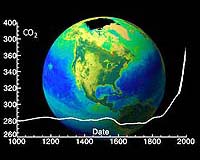
College Station (SPX) May 13, 2004 A wedge of earth and sky 14 feet high and 3 feet deep near here may help scientists worldwide better understand the ecological impact of global climate change. It's an ecosystem where native plants must react to rain and temperature extremes along a dusty, winding road under an intricate, watchful plan of three Texas Agricultural Experiment Station scientists. Thick white plastic stretches over 14-foot tall galvanized steel arches like giant, protective umbrellas to shelter 80 plots of juniper, post oak and little bluestem grass. But while the awnings prohibit nature from having her way with the young plants, the researchers may jack up the temperatures and send a rainstorm without batting an eye except to make note of the results. "We hope to learn enough to be able to anticipate vegetation change so land managers can minimize negatives or optimize the positives of global climate change," said Dr. David Briske, Experiment Station plant ecologist. Briske and Dr. Mark Tjoelker, Experiment Station forest ecologist, are co-investigators on this project, funded by the National Institute for Global Environmental Change. They are assisted by Dr. Astrid Volder, Experiment Station forest research associate. What makes this global climate change study unique, Tjoelker said, is that it is in the real world -- not a computer-generated prediction model -- and it combines rainfall and warming in various amounts to measure impact on plant growth. The researchers chose post oak, bluestem grass and junipers because those species are predominant in the 7.4 million-acre post oak savannah region from south central Texas through eastern Oklahoma. A change in rainfall and/or temperatures predicted over the next several decades could mean a shift in the dominance of these important plant species. And that could alter the way land is used and the types of wildlife able to survive there, Volder noted. Briske and Tjoelker spent a year designing and building the elaborate, experimental system. Volder joined the team recently as the climate simulations and data collection began. The system includes eight giant shelters built to exclude rainfall but allow a free flow of air so as not to create greenhouse-like conditions. Under each canopy, 10 6-foot-square plots with various combinations of the three species resemble a booklet of green, leafy postage stamps. Over some hang heat lamps; others have a "dummy lamp," Tjoelker explained, so that the same amount of shade will be projected as on the heated plots. A sprinkler system is constructed over the sheltered plots, and the researchers alter their water source with trace minerals to equal that of the area's natural rain. The team, now in its second of a three-year study, routinely run various treatments for the 100 plots and is measuring the effects. Twenty plots are planted without the protective coverings, heat lamps and water sprinklers as a check for how the species would grow under current temperatures and precipitation. "We are looking at how the plots are growing as individual plants and together in combinations with the different trees and the grass," Tjoelker said. Four combinations of weather are being tested: current rainfall, current rainfall plus warming, wet spring/dry summer; and wet spring/dry summer plus warming. Tjoelker said the experiment will go to about 40 percent drier in the summer, but the overall annual total rainfall will be about the same. Briske said the temperatures will be raised to as much as 2-3 F more than normal, added throughout the year. Everything is measured: simulated rainfall, soil moisture, soil temperature, air temperature, plant growth, and more. Already, the team is seeing some impact on plant growth. "We had predicted that juniper would be able to take advantage of extra rain in the spring, because they are evergreen so they are actively growing before the other species," Tjoelker said. "But we were surprised by the amount of growth response in the four weeks so far," Volder added. "We thought they would respond but not so much, so fast." The juniper's response points to the fact that global climate changes could mean some species would take over the region to the detriment of others, the researchers note. "This type of information may give us an idea of what the critical times are for growth," Briske explained. "And then we could decide how to best alter land use and management." Community Email This Article Comment On This Article Related Links TAMU SpaceDaily Search SpaceDaily Subscribe To SpaceDaily Express Earth Observation News - Suppiliers, Technology and Application
 New Legislation Initiated To Support Commercial Remote Sensing Industry
 New York NY (SPX) Jan 11, 2006
The importance of remotely sensed data and technologies to support natural disasters has prompted attention and action in Washington. New initiatives and legislation authorizing appropriations to the remote sensing industry will be discussed at Strategic Research Institute's U.S. Commercial Remote Sensing Industry conference, scheduled for February 9-10, 2006 in Washington D.C. |
|
|

| The content herein, unless otherwise known to be public domain, are Copyright 1995-2006 - SpaceDaily.AFP and UPI Wire Stories are copyright Agence France-Presse and United Press International. ESA PortalReports are copyright European Space Agency. All NASA sourced material is public domain. Additionalcopyrights may apply in whole or part to other bona fide parties. Advertising does not imply endorsement,agreement or approval of any opinions, statements or information provided by SpaceDaily on any Web page published or hosted by SpaceDaily. Privacy Statement |