
 |
 |
 |
 |
 |
 |
 |
 |
 |

 |
EU opens bidding for Galileo satnav network
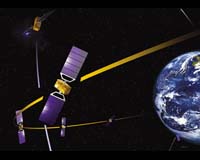
Brussels (AFP) July 1, 2008 The European Commission invited bids on Tuesday for contractors to participate in the construction of the European Union's much delayed Galileo satellite navigation network. The 30-satellite network is meant to challenge the dominance of the US-built Global Positioning System (GPS), which is widely used in navigation devices in vehicles and ships. The EU aims to have it up in space by 2013. Galileo's 3.4-billion euro (5.4-billion dollar) budget has been divided into six segments with contracts for satellites, launchers, computer programmes, ground stations, control stations and the system's operation. "With Galileo, the European Union will buy a state-of the-art satellite navigation system which will increase economic efficiency and reduce congestion and energy consumption throughout the transport sector," EU Transport Commissioner Antonio Tajani said. Contractors bidding for the work have until the European autumn to make offers. The winning contracts will be decided by the commission and the European Space Agency. Community Email This Article Comment On This Article Share This Article With Planet Earth
Related Links GPS Applications, Technology and Suppliers
 US group Boeing to bid for Galileo navigation contracts: report
 Berlin (AFP) June 16, 2008
US aerospace group Boeing plans to compete for contracts connected with the European satellite navigation system Galileo, the German newspaper Handelsblatt said on Monday, quoting a company spokeswoman. |
|
|

| The content herein, unless otherwise known to be public domain, are Copyright 1995-2007 - SpaceDaily.AFP and UPI Wire Stories are copyright Agence France-Presse and United Press International. ESA Portal Reports are copyright European Space Agency. All NASA sourced material is public domain. Additional copyrights may apply in whole or part to other bona fide parties. Advertising does not imply endorsement,agreement or approval of any opinions, statements or information provided by SpaceDaily on any Web page published or hosted by SpaceDaily. Privacy Statement |
 del.icio.us
 Digg
Digg Reddit
 YahooMyWeb
 Google
 Facebook