|
 |
 |
 |
 |
 |
 |
 |
 |

 |
EU Proposes New Greenhouse Gas Targets
Brussels (AFP) Mar 10, 2005 European Union environment ministers proposed last Thursday that industrialised countries set new targets for reducing greenhouse gases after internationally-agreed rules expire in 2012. The ministers proposed that developed countries make plans for reducing emissions by 15 to 30 percent by 2020 and by 60 to 80 percent by 2050 from benchmark levels in 1990. The EU commission and a dozen EU states including Italy and Spain have until now opposed fixing targets over concerns it would discourage the US and some developing countries from joining efforts to fight global climate change. The so-called Kyoto protocol, which sets a target for a 5.2-percent cut in emissions by the industrialised world by 2008-2012 compared to 1990, calls for the opening of negotiations on new targets at the end of the year. French Environment Minister Serge Lepeltier, who was initially opposed to setting a target for as soon as 2020, said that "it would have sent a bad signal to the whole world" if EU states did not set targets because "Europe has the will to remain the engine behind the struggle against climate change." Long a champion of Kyoto, the EU is urging other countries to follow its lead after the United States, the world's principal polluter, rejected the accord, setting a precedent for emerging countries such as India and China. The environment ministers conclusions have yet to be discussed and adopted by heads of state at a March 22-23 summit here.
related news
Britain Calls For More Technology That Cuts Greenhouse Gas Emissions London (AFP) Mar 10, 2005 - The world economy must step up the introduction of technology that will reduce "greenhouse gas" emissions because fossil fuels will continue to dominate the market in the future, the British government said Thursday. In an article to be published in the British press, two cabinet ministers outlined their view ahead of a meeting on March 15-16 in London of energy and finance ministers from the G8 group of leading industrial countries. "It is important that the G8 accepts the urgency of the problem and the need to take action," wrote Environment Minister Margaret Beckett and Trade and Industry Minister Patricia Hewitt. "As the world's economy grows, energy demand will undoubtedly increase," their article said. "In 2002, generation of energy and heat accounted for 40 percent of worldwide carbon dioxide emissions. Although energy from renewables is growing rapidly we must accept that fossil fuels will continue to generate the majority of the world's energy for the foreseeable future," it said. "But we can make fossil fuels cleaner, encourage the development and deployment of renewable energy and increase the efficiency of energy production and end use," the article said. "Many of these technologies exist already and can be implemented at a much lower cost than imagined," it said. Many have argued these measures make economic sense. Swiss Re, the world's second largest re-insurer, has estimated that the economic costs of global warming could double to 150 billion US dollars each year in the next decade. Britain has made tackling climate change one of its priorities as it chairs this year the presidency of the Group of Eight, comprised of the United States, Japan, Germany, Britain, Canada, France, Italy and Russia. Britain has also announced it as a priority of its presidency later this year of the European Union. Community Email This Article Comment On This Article Related Links SpaceDaily Search SpaceDaily Subscribe To SpaceDaily Express Earth Observation News - Suppiliers, Technology and Application
 New Legislation Initiated To Support Commercial Remote Sensing Industry
 New York NY (SPX) Jan 11, 2006
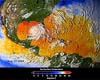
The importance of remotely sensed data and technologies to support natural disasters has prompted attention and action in Washington. New initiatives and legislation authorizing appropriations to the remote sensing industry will be discussed at Strategic Research Institute's U.S. Commercial Remote Sensing Industry conference, scheduled for February 9-10, 2006 in Washington D.C. |
|
|

| The content herein, unless otherwise known to be public domain, are Copyright 1995-2006 - SpaceDaily.AFP and UPI Wire Stories are copyright Agence France-Presse and United Press International. ESA PortalReports are copyright European Space Agency. All NASA sourced material is public domain. Additionalcopyrights may apply in whole or part to other bona fide parties. Advertising does not imply endorsement,agreement or approval of any opinions, statements or information provided by SpaceDaily on any Web page published or hosted by SpaceDaily. Privacy Statement |