|
 |
 |
 |
 |
 |
 |
 |
 |

 |
EU Competitiveness Council Debates Space Policy
Brussels - Mar 26, 2004 The Competitiveness Council of the European Union, meeting on 11 March 2004, discussed European Space Policy � not only the long-term vision but also shorter-term possibilities for co-operative initiatives with the European Space Agency (ESA). The Space White Paper published in November 2003 lays out an ambitious action plan for European Space Policy, reflecting the growing importance of space activities to the lives of all European citizens. Today, weather forecasting, telecommunications and navigation depend heavily on satellite technologies; and the potential applications are even greater, supporting European policies and bringing new services into many areas of daily life. To unlock this potential, build synergies and avoid duplication demands close co-operation between the Community, the European Space Agency and national space programmes. With this in mind, the Competitiveness Council, composed of national government ministers, discussed the coordination of space-related activities for 2004.
A working agreement The real advantages of EU/ESA co-operation are already being seen in the GALILEO programme for satellite radionavigation � first proposed by the European Commission in 1999 and jointly funded with ESA. GALILEO will provide the first independent European space-based facility for navigation, timing and positioning with a multitude of applications in transport, health and public services. GALILEO shows the real synergies that can be found between ESA, coordinating the supply-side access to space, and the EU consolidating the widespread, demand-side applications.
Space for Growth � Growth for Space The Growth Initiative aims to pull Europe out of the recent economic downturn by speeding up the rollout of transport, energy and broadband communication networks as well as increasing investment in training. It does this by coordinating existing private, national and European funding, refocusing investment into areas that will strengthen structural reform and stimulate economic growth and employment. The Quick Start programme, a component of the Growth Initiative, covers concrete projects within the priority areas that are ready to go - and it includes three space-related actions. The digital divide project focuses on providing broadband communications in remote and rural areas � using several technologies including satellites. This is a key part of supporting EU regional and cohesion policies. Extending Europe�s launch capabilities by building a facility to launch Russian Soyuz rockets from the European site in Guyana. Soyuz rockets carry different types and sizes of payload and thus their use will increase the launch options available. The Global Monitoring for Environment and Security (GMES) project will use satellite, ground and ocean-based monitoring technologies to form a global information network with many beneficial applications. Continuous observation will allow early warning of flood and fire risk as well as humanitarian crises, both within and without Europe�s borders. Coordinated responses to disasters such as forest fires and man-made oils spills will be based on more complete and current information. Accurate tracking of pollution and climate change phenomena will contribute to sustainable development targets such as the Kyoto commitments. These three projects were discussed with ESA as possible joint initiatives when the EU/ESA framework agreement was formulated. The GMES project in particular has a potentially large impact across a range of EU policy areas such as security, regional policies and humanitarian aid.
Space policy development In the longer term, these roles as well as those of national space organisations, need to be brought into a new governance structure; particularly in view of the new constitutional treaty that assigns competences on space policy to the EU institutions. The Competitiveness Council focused on possible short-term actions on policy development that can be discussed and undertaken, together with ESA, possibly through an informal 'Space Council', before the end of 2004. Community Email This Article Comment On This Article Related Links GMES SpaceDaily Search SpaceDaily Subscribe To SpaceDaily Express Earth Observation News - Suppiliers, Technology and Application
 New Legislation Initiated To Support Commercial Remote Sensing Industry
 New York NY (SPX) Jan 11, 2006
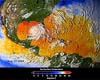
The importance of remotely sensed data and technologies to support natural disasters has prompted attention and action in Washington. New initiatives and legislation authorizing appropriations to the remote sensing industry will be discussed at Strategic Research Institute's U.S. Commercial Remote Sensing Industry conference, scheduled for February 9-10, 2006 in Washington D.C. |
|
|

| The content herein, unless otherwise known to be public domain, are Copyright 1995-2006 - SpaceDaily.AFP and UPI Wire Stories are copyright Agence France-Presse and United Press International. ESA PortalReports are copyright European Space Agency. All NASA sourced material is public domain. Additionalcopyrights may apply in whole or part to other bona fide parties. Advertising does not imply endorsement,agreement or approval of any opinions, statements or information provided by SpaceDaily on any Web page published or hosted by SpaceDaily. Privacy Statement |