|
 |
 |
 |
 |
 |
 |
 |
 |

 |
EU And US To Make GPS And Galileo Compatible
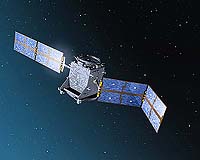
Brussels (AFP) Jul 26, 2007 The European Union and the United States agreed on Thursday to make the US GPS satellite navigation system and its EU rival Galileo compatible, they said in a joint statement. EU and US experts agreed on plans for a signal, dubbed multiplexed binary offset carrier or MBOC, to be used by both the popular US Global Positioning System and the EU's Galileo system, which is still in development. In the future, users will be able to receive signals from both systems, which would allow for more precise services and wider geographical coverage. The military-run GPS, developed in the United States and due to be updated, has long been used in cars, boats and aircraft for positioning as well in mapping, fisheries and scientific research. Meanwhile, Europe's Galileo system is intended to be a rival to GPS, but it has failed to get off the ground due to cost over-runs and bickering among the private contractors. A Commission spokesman said the agreement would allow GPS to be more precise even when there was strong interference, allowing it to locate an object to within 3.5 metres (11.5 feet) instead of 10 currently. Galileo, which is scheduled to be operational in 2012, is supposed to be able to locate an object to within one metre.
Source: Agence France-Presse Community Email This Article Comment On This Article Related Links GPS Applications, Technology and Suppliers
 That Cell Phone In Your Hand Is A Tracking Device
 Beijing (XNA) Jul 27, 2007
Cell phone signals are being used by law enforcement officials to find missing people in romote areas, to track terrorists and fugitives, and to place suspects near crime scenes, experts say. "The average citizen is not aware that they are carrying a location-tracking device in their pocket," said Kevin Bankston, a lawyer for the Electronic Frontier Foundation, a San Francisco-based group that works to preserve privacy rights. |
|
|

| The content herein, unless otherwise known to be public domain, are Copyright 1995-2007 - SpaceDaily.AFP and UPI Wire Stories are copyright Agence France-Presse and United Press International. ESA Portal Reports are copyright European Space Agency. All NASA sourced material is public domain. Additional copyrights may apply in whole or part to other bona fide parties. Advertising does not imply endorsement,agreement or approval of any opinions, statements or information provided by SpaceDaily on any Web page published or hosted by SpaceDaily. Privacy Statement |