|
 |
 |
 |
 |
 |
 |
 |
 |

 |
ESA Transmits First-Ever Telecommands To Chinese Satellite
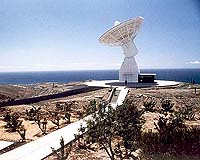
Paris, France (ESA) Nov 02, 2007 For the first time, ESA tracking stations have transmitted telecommands to a Chinese satellite. This morning at 07:15 CET (06:15 UTC), China's mission control reported that commands transmitted from Maspalomas station had been successfully received by the Chang'e-1 Moon mission. ESA ground tracking support to China's Chang'e-1 successfully started on 1 November 2007 at 04:35 CET (03:35 UTC) with the first receipt of telemetry signals from the Chinese mission at ESA's 35m deep-space station at New Norcia, Australia. Two hours and 39 minutes later, the first telecommands to Chang'e-1 were transmitted via ESA's 15m station in Maspalomas, Spain, when the Chinese satellite was nearly 200 000 km from Maspalomas station. An hour later, the ESA station in Kourou, French Guiana, also successfully received telemetry and transmitted commands to Chang'e-1. New Norcia, Maspalomas and Kourou stations are part of ESA's ESTRACK ground station network, and are remotely controlled from the European Space Operations Centre (ESOC), in Darmstadt, Germany. The successful communications mark a major milestone as this is the first time a telecommand to a Chinese spacecraft has been transmitted from an ESA station. In addition to receipt of telemetry and transmission of telecommands, the Maspalomas and Kourou stations also performed ranging and Doppler measurements used to determine the spacecraft's location and direction. "The support began as planned and without any problems. We were confident it would work given the extensive preparations and intensive testing we did in close cooperation with the Chinese," said Erik Soerensen, Head of the System Requirements and Validation Section at ESOC. Community Email This Article Comment On This Article Related Links ESTRACK tracking stations Space Technology News - Applications and Research
 Revolution ahead in data storage, say IT wizards
 Paris (AFP) Nov 1, 2007
The world's smallest hard drives have already shrunk to the size of a postage stamp, but nanoscale computing may soon make that achievement look elephantine, say some of the stars of information technology. |
|
|

| The content herein, unless otherwise known to be public domain, are Copyright 1995-2007 - SpaceDaily.AFP and UPI Wire Stories are copyright Agence France-Presse and United Press International. ESA Portal Reports are copyright European Space Agency. All NASA sourced material is public domain. Additional copyrights may apply in whole or part to other bona fide parties. Advertising does not imply endorsement,agreement or approval of any opinions, statements or information provided by SpaceDaily on any Web page published or hosted by SpaceDaily. Privacy Statement |