|
 |
 |
 |
 |
 |
 |
 |
 |

 |
ESA Open-Source Software Supports TerraSAR-X
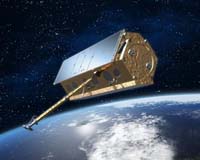
Darmstadt, Germany (ESA) Mar 29, 2007 Germany's next-generation TerraSAR-X uses sophisticated ground infrastructure to deliver Earth observation data to scientists and commercial customers. Open-source software developed at ESA's Operations Centre is helping to make the mission a success. The German Aerospace Center (DLR) is on track to launch TerraSAR-X, an Earth observation mission using synthetic aperture radar in the next few weeks, and is now finalising a sophisticated 'ground segment' infrastructure that will support the satellite, or space segment, for mission control and data distribution. A key part of the ground segment is the Mission Control System, and DLR has adopted SCOS-2000 (Spacecraft Operating System 2000) software, developed at the European Space Operations Centre (ESA/ESOC) in Darmstadt, Germany. SCOS-2000 is available to European industrial and agency partners under an open-source licensing scheme and is helping foster profitable business opportunities. So-called 'open-source' software is gaining wide popularity for Internet and enterprise applications, and requires that the source code be distributed freely so long as the licensee also agrees to make any modifications or improvements freely available to others. This has the effect of making all subsequent improvements freely available to the entire community of users, who need pay only for support and maintenance provided by industrial contractors; the improved source code itself remains free.
High-resolution radar images of planet Earth Using SCOS-2000, TerraSAR-X will be controlled from the German Space Operations Centre, located at DLR's Oberpfaffenhofen facility near Munich.
Open-source model provides business opportunities "We hope that other SCOS-2000 users will have as much success as DLR. ESA's open-source licensing model provides strong business potential for European system integrators, which benefits everyone in the space community," says Nestor Peccia, Head of ESOC's Data Systems Infrastructure Division. DLR previously used ESA's SCOS software for the center's CHAMP (CHAllenging Minisatellite Payload) mission, launched in 2000, which is still in operation. "We started work on TerraSAR-X with SCOS-2000 in 2003. In 2005, we upgraded to the latest version, which is the version still in use. We are now testing the final upgrades and corrections," says Michael Schmidhuber, member of the DLR ground segment implementation team in Oberpfaffenhofen. "A very positive aspect of SCOS-2000 is the possibility to provide feedback to the ESA development team. In this way, several improvements devised by DLR have found their way into the core product," says Schmidhuber. For TerraSAR-X, Siemens AG Austria is providing comprehensive support to DLR as the industrial partner for SCOS-2000 maintenance and ongoing support. Under the open-source software model, the industrial partner provides key support for improving and validating software. "Surprisingly, we found many bugs in the SCOS-2000 software. These were fixed mainly by Siemens Austria. It seems not all features are used - or are used differently - by ESA missions and so many bugs remain undetected. Now, we have a stable version for our mission," says Martin Wickler, the project implementation manager at DLR. These improvements will be reflected in future releases of SCOS-2000, thus strengthening the overall product and proving the value of the open-source model.
ESA software supports unique public-private partnership Use of the mission's data by the science community will be coordinated by DLR's German Remote Sensing Data Center, while Infoterra GmbH (Co. Ltd.), a subsidiary of EADS Space, will develop geoinformation products and will market the data commercially. In this way both commercial and scientific users will share access to the available observation time. Community Email This Article Comment On This Article Related Links Observing the Earth TerraSAR-X German Aerospace Center (DLR) Infoterra GmbH TerraSAR-X exploitation website All about the technology of space and more Space Technology News - Applications and Research
 New KVH TracVision M5 And M7 Deliver Stronger Signals For Superior Onboard Satellite TV
 Middletown RI (SPX) Mar 28, 2007
Entertainment on boats is about to go farther and faster than it ever has before thanks to the all-new family of TracVision M-series satellite TV systems from KVH Industries, Inc., unveiled this week at the Palm Beach Boat Show. These powerful new marine satellite TV systems offer KVH's exclusive new RingFire antenna technology for the best coverage and reception available in the marine industry today. They bring true "home theatre" quality satellite TV programming onboard, including HDTV. |
|
|

| The content herein, unless otherwise known to be public domain, are Copyright 1995-2006 - SpaceDaily.AFP and UPI Wire Stories are copyright Agence France-Presse and United Press International. ESA PortalReports are copyright European Space Agency. All NASA sourced material is public domain. Additionalcopyrights may apply in whole or part to other bona fide parties. Advertising does not imply endorsement,agreement or approval of any opinions, statements or information provided by SpaceDaily on any Web page published or hosted by SpaceDaily. Privacy Statement |