|
 |
 |
 |
 |
 |
 |
 |
 |

 |
ESA At The Universal Forum Of Culture
Paris (ESA) Jun 07, 2004 A new international event, the Universal Forum of Culture, has just opened in Barcelona, Spain. The three main themes are Cultural Diversity, Sustainable Development and Conditions for Peace. ESA is an exhibitor at the Forum and also participates in the Forum 'Dialogues', designed to promote critical debate and reflection on major issues of global concern. The Forum, that opened on 9 May and will continue until 26 September 2004, is organised by the Spanish Government, the autonomous Government of Catalonia and Barcelona's City Council. UNESCO is one of the main partners in this international event.
Why a 'forum'? Numerous activities are taking place during the Forum but the main events are the 'Dialogues' to promote debate and foster contact between speakers and their audience; 'Performances' including music, dance, theatre, puppets and street parades; and 'Exhibitions' designed to provoke new thoughts and attitudes for the 21st century.
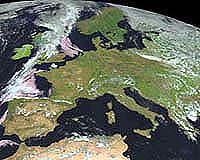
Earth in sight Observing our planet from space helps to protect the environment and exploring our universe provides a better understanding of our origins. At the ESA exhibit visitors can learn more about: + the International Space Station: the largest international scientific joint venture ever undertaken in history, involving the USA, Russia, Canada, Japan and Europe. + Envisat and Meteosat: ESA missions for environmental and meteorological studies. + Mars Express and Rosetta: fascinating and challenging missions to discover more about our universe and the origins of life.
Debates and discussions Eva Oriol, ESA Project Manager of the Meteosat Second Generation (MSG) and Metop missions, will participate in the World Conference on Broadcast Meteorology from 3 to 5 June and the 5 June session on Our changing climate: What is happening and what can we do about it. Each evening, as part of the 141 questions for 141 nights, visitors are invited to debate with an internationally renowned personality. On 16 June, ESA astronaut Pedro Duque will discuss the new frontiers of European space activities. "ESA's presence at this forum is a demonstration of how ESA's 15 Member States work together in a multicultural environment to conciliate national aims and aspirations for exclusively peaceful joint space activities," says Maria Menendez, head of ESA exhibitions. "Working together in space activities offers countries a way of communicating globally just as this international forum is a valid instrument for bridging the gap between different cultures." Community Email This Article Comment On This Article Related Links Barcelona 2004 Forum SpaceDaily Search SpaceDaily Subscribe To SpaceDaily Express Space Tourism, Space Transport and Space Exploration News
 NASA Refines Design For Crew Exploration Vehicle
 Washington DC (SPX) Jan 12, 2006
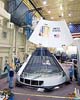
NASA's Constellation Program is making progress toward selecting a prime contractor to design, develop and build the Crew Exploration Vehicle (CEV), America's first new human spacecraft in 30 years. |
|
|

| The content herein, unless otherwise known to be public domain, are Copyright 1995-2006 - SpaceDaily.AFP and UPI Wire Stories are copyright Agence France-Presse and United Press International. ESA PortalReports are copyright European Space Agency. All NASA sourced material is public domain. Additionalcopyrights may apply in whole or part to other bona fide parties. Advertising does not imply endorsement,agreement or approval of any opinions, statements or information provided by SpaceDaily on any Web page published or hosted by SpaceDaily. Privacy Statement |