|
 |
 |
 |
 |
 |
 |
 |
 |

 |
Drugs From The Deep Blue
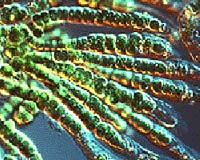
Davis CA (SPX) Jun 02, 2005 For Tadeusz Molinski, the sea is full of riches - and he does not mean oil fields or fisheries. Molinski, a professor of chemistry at the University of California, Davis, is searching for new treatments for cancer, infectious diseases and other conditions that could be made from natural products in the soft bodies of some of the ocean's simplest inhabitants. "Three quarters of the world is covered by oceans, and we've only dipped below the surface," Molinski said. This chemist sees natural products from marine organisms as an opportunity to answer questions in biology and find potential leads for the next generation of drugs, whether those are anti-fungals or treatments for cancer. Many pharmaceutical drugs on the market, from aspirin to cholesterol-lowering "statins," are derived from natural products such as plants or bacteria. Molinski says modern developments in analytical chemistry, including highly sensitive instrumentation, sophisticated screening capabilities and discoveries from mapping the human genome, have created a renaissance of interest in these sources of potential medicines. Molinski's laboratory studies the chemistry and biology of marine natural products, or chemical compounds made by sea creatures. It is part of a developing focus on pharmaceutical chemistry within the UC Davis chemistry department, including research on biologically active molecules and high-throughput screening techniques. Most of Molinski's samples come from sponges and tunicates, marine creatures that can neither swim away from a diver nor bite. Recently, the researchers have also begun to collect samples from cyanobacteria, single-celled organisms that occur as slimy mats or filaments in places such as coral reefs and mangrove lagoons. Some of these compounds have biochemical activities that could be useful in medicine - killing microbes, stopping growth of cancer cells, or affecting the flow of calcium in and out of cells. Marine natural products are an eclectic mix of chemical types, drawing on all the pathways of metabolism, Molinski said. Some are related to fats and proteins; others include elements such as bromine, sometimes bonded into improbable structures. "It's a rich, complex and edited chemical library," Molinski said. "They're really fascinating little jewels made by niche creatures." As well as being largely unexplored, the chemistry of these marine organisms is very different than that of land plants and animals, reflecting both a different environment and millions of years of separate evolution. That should make it harder for microbes to evolve resistance to such drugs, as they are being attacked from a completely different direction. Molinski, a certified diver, and his graduate students make regular collecting trips to study sites in Micronesia, Western Australia and - using a seagoing vessel, the R/V Seward Johnson based in Florida - the Atlantic Ocean around the Bahamas. Warm tropical waters support a wider variety of sponges, making them richer prospecting grounds. Back in the lab, the scientists put extracts from the animals they have collected through a battery of tests. If they find something with interesting properties, the researchers attempt to isolate and identify the molecule. The next step is to start from conventional chemistry and make the compound in the lab, then try to find the simplest structure with the same properties. This work can pull in techniques from different areas of chemistry and biochemistry, but the pathways used to make these products naturally are far too complex to reproduce with current genetic engineering techniques, Molinski said. One of their finds is phorboxazole, made by an Indian Ocean sponge collected by Molinski's team off the coast of Western Australia. Phorboxazole A is a potent toxin that in the laboratory, can inhibit the growth of a wide range of tumor cell types even at very low concentrations. It appears to block cancer cells from dividing at a different, earlier step than that targeted by other clinically important anticancer drugs. "It uses a different mechanism to any known drug, it's unlike anything else," Molinski said. Chemists are now investigating phorboxazole and related compounds to see if they can be made more efficiently. "It's excited a lot of chemists and cancer biologists," Molinski said. Molinski's group has also gone fishing for drugs that modulate calcium channels within cells, in collaboration with Isaac Pessah, professor and director of the Center for Children's Environmental Health at the UC Davis School of Veterinary Medicine. The controlled release of calcium is a key step in many cellular processes. "In any cell you can think of, calcium plays a role in shaping responses, activating or inhibiting enzymes, changing the shape of the cell, triggering cell division," Pessah said. Calcium is also a key signal in both fertilization and programmed cell death, he said. Pharmaceuticals that affect calcium channels range from drugs given to organ transplant patients to suppress the immune system, to treatments for high blood pressure and heart disease. Pessah's research group works with calcium channel modulators and other biomolecules derived from plants and scorpion venom. But when Pessah and Molinski got to talking at a party some years ago, they quickly realized that they could apply the same methods to screen 124 sponges that Molinski's group had recently collected off the coast of Western Australia. In one of the samples they came up with xestospongin C, the first of a class of drugs now widely used in research studies on calcium transport. Xestospongins block the ability of a signaling molecule called inositol 1,4,5 trisphosphate (IP3) to trigger the release of calcium within cells. In most cases, scientists do not know why marine organisms make these compounds, Molinski said. As much as five percent of the animal may be made up of one compound - a big investment of energy and resources. Chemical ecology is the field of research that explores how natural products serve the organisms that produce or harbor them. The compounds could be chemical defenses to deter predators. For example, some fish "taste" food items before swallowing them, sometimes spitting the item out and sucking it back in several times before rejecting or eating it. Some could be natural anti-fouling agents that stop a creature that does not move, like a sponge, from being overgrown with other sea life. Others might be released into the seawater as pheromones to encourage larvae to join an existing colony, or to attract a mate. Molinski's group is collaborating with Jay Stachowicz, assistant professor in the UC Davis Section of Evolution and Ecology and his graduate student, Amy Larson, at the Bodega Marine Laboratory, and with Joe Pawlik, a professor at the University of North Carolina at Wilmington, to address some of these questions. Discovering natural products is a great training tool because it requires skills in all areas of chemistry and a wide view of allied disciplines, Molinski said. "It's like a crossword puzzle where you have to find the clues," he said. "Natural products engage your intellectual curiosity with a sense of wonder that comes from standing at the shores of new worlds." Community Email This Article Comment On This Article Related Links University of California, Davis SpaceDaily Search SpaceDaily Subscribe To SpaceDaily Express Dirt, rocks and all the stuff we stand on firmly
 Magnetic Reconnection Region Larger Than 2.5 Million Km Found In The Solar Wind
 Paris (ESA) Jan 12, 2006
Using the ESA Cluster spacecraft and the NASA Wind and ACE satellites, a team of American and European scientists have discovered the largest jets of particles created between the Earth and the Sun by magnetic reconnection. This result makes the cover of this week's issue of Nature. |
|
|

| The content herein, unless otherwise known to be public domain, are Copyright 1995-2006 - SpaceDaily.AFP and UPI Wire Stories are copyright Agence France-Presse and United Press International. ESA PortalReports are copyright European Space Agency. All NASA sourced material is public domain. Additionalcopyrights may apply in whole or part to other bona fide parties. Advertising does not imply endorsement,agreement or approval of any opinions, statements or information provided by SpaceDaily on any Web page published or hosted by SpaceDaily. Privacy Statement |