|
 |
 |
 |
 |
 |
 |
 |
 |

 |
Drought in southeast US fuels battle over water resources
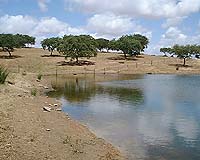
Cumming, Georgia (AFP) Oct 28, 2007 An extreme drought in the southeastern United States has fueled a bitter tri-state battle over dwindling water resources that pits man against mussels. Millions of people in the state of Georgia fear their taps could run dry, while environmentalists in Florida say freshwater mollusks protected under the US Endangered Species Act risk dying off. Hoping to guarantee no one will go thirsty, Georgia authorities want to drastically reduce the outflow from a reservoir that supplies drinking water to three million people. But neighboring Alabama claims that would have devastating economic effects on its population, while Florida says a reduced flow would threaten fragile ecosystems. "You'd think people would come before mussels," said Bob Leamy, 55, walking on caked mud that was once under Lake Lanier's waters. The man-made lake is at the frontline of the battle of words. It supplies drinking water for more than three million people in the city of Atlanta, feeds the Chattahoochee river that runs along the border with Alabama and flows into Florida's Apalachicola river. Because of the drought, the 38,000 acre reservoir is almost five meters (15 feet) below average levels, and officials say the water will continue to dwindle. Georgia has filed a legal motion seeking to force the US Army Corps of Engineers, which manages the reservoir, to limit the release of water. Alabama and Florida both oppose the motion. "The State of Georgia is suffering a drought of historic proportions and is facing potentially dire and irreparable consequences if the United States Army Corps of Engineers does not immediately stop depleting the reservoir storage," Georgia state Governor said at a recent news conference on the banks of the receeding lake. Perdue asked US President George W. Bush to temporarily exempt Georgia from the Endangered Species Act, under which outflow from the reservoir is linked to the survival needs of the purple bankclimber and fat three-ridge mussels in the Apalachicola River. The governors of Alabama and Florida have asked the president to reject Perdue's request. Alabama Governor Bob Riley warned the measure sought by Georgia would "have dire consequences on people and their livelihoods downstream in Alabama" and could lead to the shut-down of a nuclear power plant and industries along the Chattahoochee River. Florida's Charlie Crist insists the measure would have a devastating effect not only on protected mollusk species but also on the multi-million fishing industry in the area where the Apalachicola River flows into the Gulf of Mexico. Many Georgia residents, particularly in Atlanta and along the shores of Lake Lanier, are furious over their neighbors stance. "Our problem is that the lake has become political," said Leamy, a retired building contractor who lives in the small town of Cumming, near Lake Lanier. Residents say the sinking reservoir level threatens numerous jobs linked to recreational use of the lake. Most boat ramps have had to shut down, and many boaters stay away from the lake because of the navigational hazards posed by the low water. "There's this guy who'd just bought a 500,000-dollar boat, tried it out and hit a reef. It was a total loss," said Ken Smith, whose company sells second-hand motorboats. Echoing the feelings of many locals, John Linder, a Republican congressman for Georgia says the choice authorities face is between "the health and safety of the people who live in Georgia or protecting species that will now be endangering our welfare." But others say the battle should serve as a wake-up call in a region where population growth is putting increasing pressure on natural resources. "We all must change the way we think about and use our fresh water resources," says Brigadier General Joseph Schroedel, who commands the Corps of Engineers division that oversees the Lake Lanier water system. Community Email This Article Comment On This Article Related Links Climate Science News - Modeling, Mitigation Adaptation
 White House defends 'health benefits' of climate change
 Washington (AFP) Oct 25, 2007
The White House on Thursday defended its prediction that climate change would bring some "health benefits" to humans, a forecast unlikely to endear it to critics of the US environmental record. |
|
|

| The content herein, unless otherwise known to be public domain, are Copyright 1995-2007 - SpaceDaily.AFP and UPI Wire Stories are copyright Agence France-Presse and United Press International. ESA Portal Reports are copyright European Space Agency. All NASA sourced material is public domain. Additional copyrights may apply in whole or part to other bona fide parties. Advertising does not imply endorsement,agreement or approval of any opinions, statements or information provided by SpaceDaily on any Web page published or hosted by SpaceDaily. Privacy Statement |